
Celebrating women in translation month
Loranne Vella, contributor of the Feminine Voice of Malta, and Sepideh Razmjoo, contributor of Iranian Women Speak, are two creative activists. They share their take on female empowerment, translations, and using art as a platform to fight for social justice.
What does it mean to you to write in your native language/English (or have the work translated)?
“For me, art serves as a form of language. Art is my language; it is the medium through which I communicate with the world around me. While traditional language is confined to words, the language of art transcends these limitations; it is more universal, inclusive, and void of borders. When discussing translation and the role of women translators, this concept evokes the notion of the bridge that language can forge between hearts and cultures. Writing in one's native tongue or engaging in translation is of paramount importance for women, as each woman creates a distinct world through her own language. When this world is translated or recounted, it fosters a broader dialogue. Just as translation conveys meaning from one language to another, art similarly facilitates a direct expression of inner emotions and experiences to the external world, without intermediaries.”
— Sepideh Razmjoo
“A good translator is defined by their ability to pay close, honest attention to a text’s voice, tone, and intent. Yet, even that honesty can be shaped, consciously or not, by ideology. As a writer and translator, the role of women in translation is particularly significant to me, not only in terms of representation but also in the transformative lens through which women approach language, meaning, and nuance. Female translators often bring to the fore the subtleties and silences in texts that might otherwise be overlooked. Their work is a form of cultural activism, amplifying voices that have historically been marginalised, especially those of women writers across the world. In an ideal world, gender wouldn’t matter in literary translation, just as eye colour or height doesn’t define a person’s ability to write or translate. But we’re not there yet. The question of who translates whom still carries weight, especially when the act of translation has historically been shaped by power dynamics. We’ve seen male translators insert misogynistic interpretations where none existed, and for centuries, women were limited in what they were ‘allowed’ to translate.”
— Loranne Vella
Translation is powerful. It shapes how stories are heard across cultures. That’s why it must be handled with care and integrity.— Loranne VellaContributing to “Iranian Women Speak,” an IHRAM Press anthology
“My collaboration with Iranian Women Speak was an empowering and transformative experience. My writings and works were featured in this publication, serving as a vital connection to a broader world of women and audiences who share our concerns. In Iran, the media landscape for addressing women's issues and showcasing female artists is severely restricted, making such opportunities invaluable.
”This collaboration was not merely about publishing text or images; it was an opening to a new realm. While it carried risks, I embraced it wholeheartedly. As an Iranian female artist without a platform for free expression in my country, I have always felt the urgency to forge global connections. This partnership marked the beginning of a dialogue with audiences beyond borders, demonstrating that even when our voices are confined, they can resonate across the globe.”
— Sepideh Razmjoo
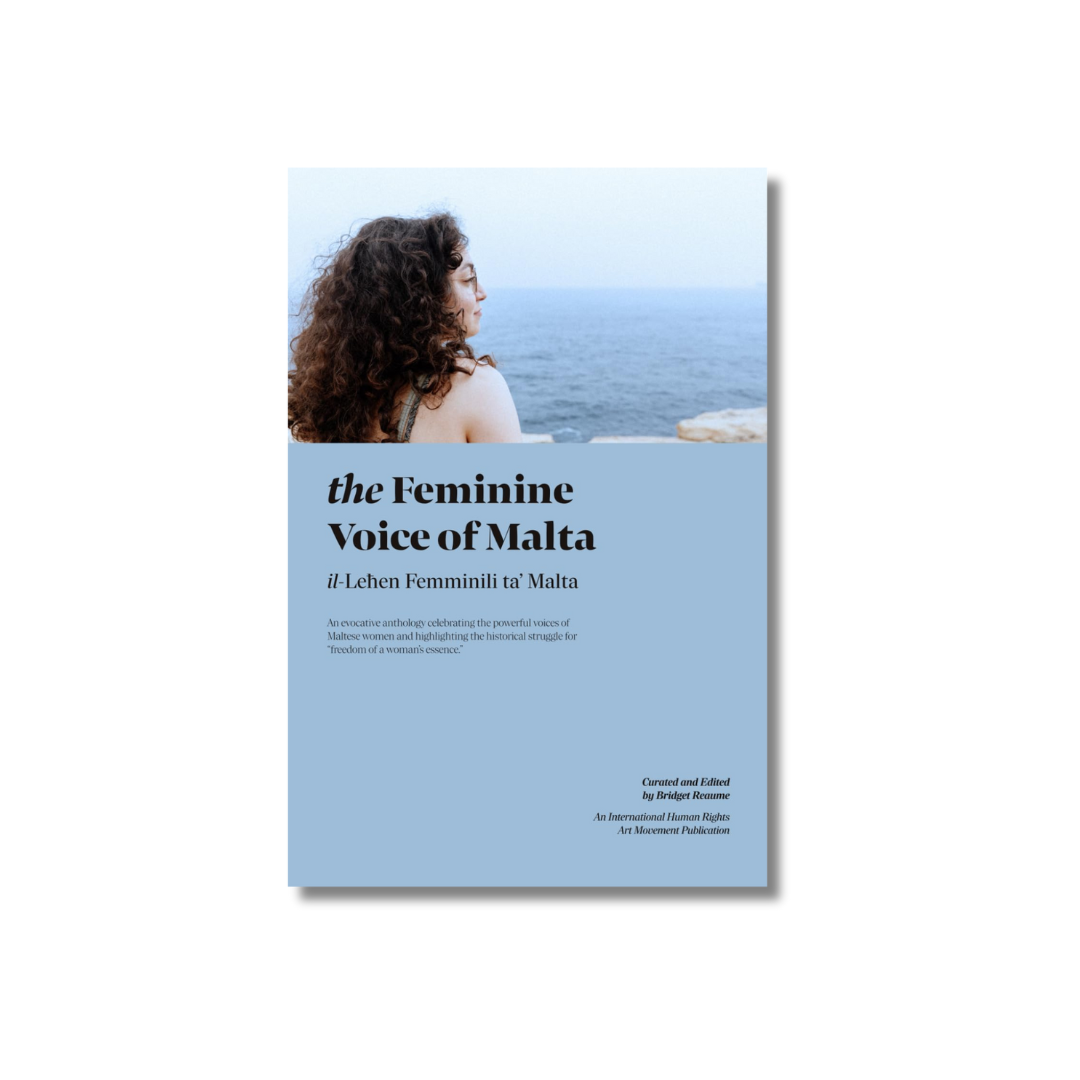
Contributing to “the Feminine Voice of Malta,” an IHRAM Press anthology
“Being part of The Feminine Voice of Malta was important to me because it was more than just a literary contribution; it was a collective act of resistance, a political and personal act of reclaiming voice, space, and identity. For too long, the voices of women in Malta have been systematically silenced, dismissed, or set apart as somehow secondary to the ‘main’ literary canon. This anthology stands in defiance of that. It gives space to those voices that have been kept at the margins—women, trans, non-binary—whose experiences are often out of tune with the dominant narrative. Writing from a female perspective is a powerful stance; it challenges the systems that have tried to define and contain women. Our strength, our anger, our complexity, so often dismissed as incoherence or hysteria, are in fact deeply threatening to a patriarchal culture that thrives on control and silence. By being part of it, I felt I had joined a chorus that refuses to be silent. We came together to tell our stories, rewrite our histories, and help shape a future that listens.”
— Loranne Vella
We Iranian women are deeply familiar with the fight for social justice.
Justice and struggle are foundational aspects of our lives as women, woven into the very fabric of our existence.
— Sepideh RazmjooHow do you weave social-justice into your writing/art?
“As a young Iranian female artist, I assert that social justice is inextricably linked to our struggle. Throughout my life and artistic endeavors, I have consistently fought for equal rights and social justice. In Iran, the concepts of justice and the quest for it have always existed within the complexities of our society. However, following the ‘Women, Life, Freedom’ movement, women's demands have become more visible and undeniable. Women are now confidently voicing their demands for justice in the streets.
Following Mahsa Amini's tragic death, the fervent participation of women in protests captured global attention through images and videos. It is now imperative to document and express these experiences through every available medium: sculpture, painting, music, film, books, poetry—anything that can amplify our voices and secure our place in history.”
— Sepideh Razmjoo
“Advocating for social justice is at the heart of why and how I write. I’ve always believed that literature has the power to disrupt, to question, to expose what’s hidden beneath the surface of everyday life. My writing often stems from a need to give voice to those silenced by systems of power, whether political, patriarchal, or cultural. Through literature, I aim to challenge dominant narratives and offer alternative perspectives, particularly from the margins. Writing becomes a form of resistance, a way to reclaim space and language, and ultimately, a tool for imagining more just and inclusive futures. Which, I believe, are the same founding principles of IHRAM Press. Literature is a form of activism. To quote Monique Wittig, literature is like a Trojan horse which enters quietly, stealthily in our everyday life to then cause havoc from within. Other writers have compared it to a virus, conquering and mutating its host from inside. I write with these very powerful images of literature in mind.”
— Loranne Vella
Support our Movement
*
Support our Movement *
Learn more about Iranian Women Speak and the bold contributors within.

Make it stand out
Whatever it is, the way you tell your story online can make all the difference.
Learn more about the Feminine Voice of Malta and the bold contributors within.
Make it stand out
Whatever it is, the way you tell your story online can make all the difference.