
What makes you write? Part 1
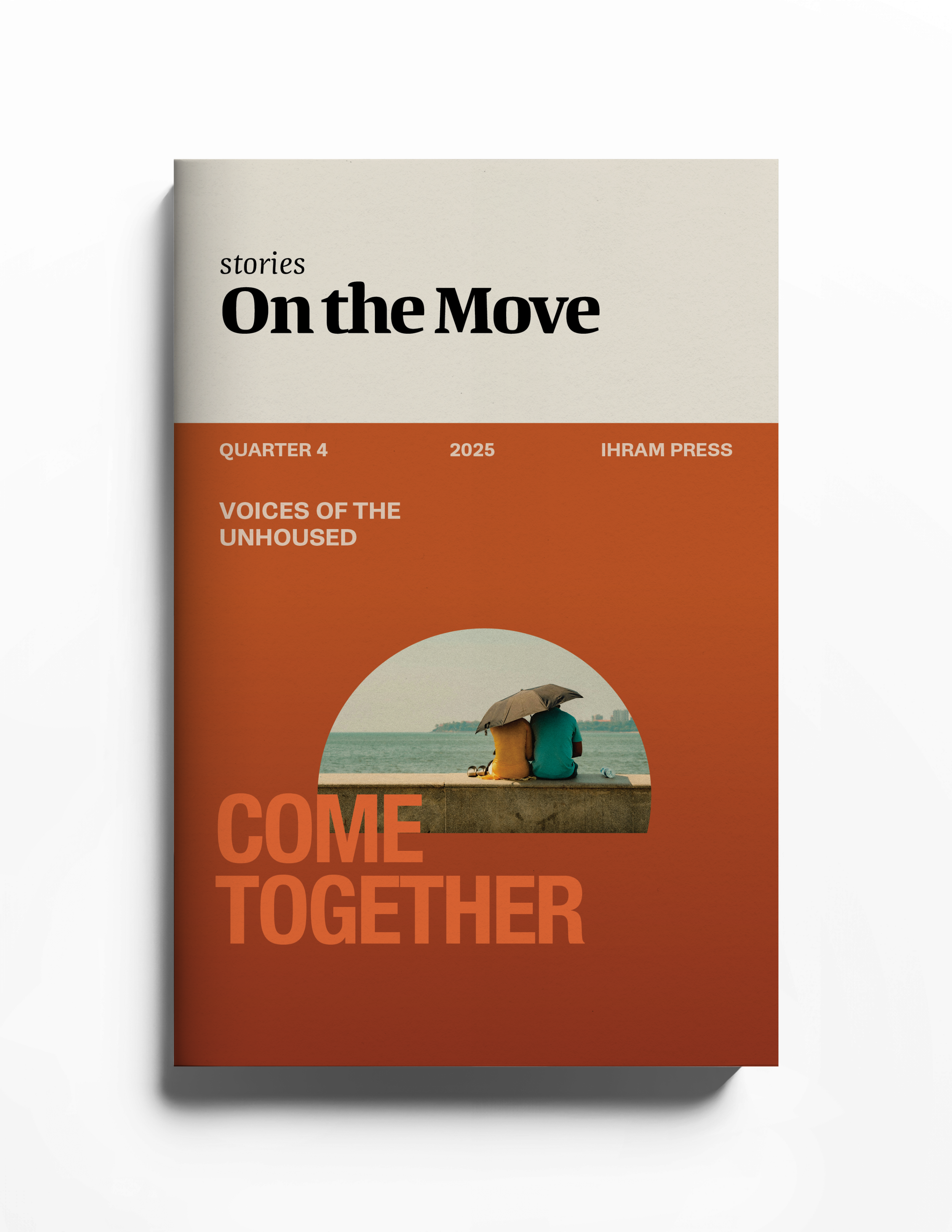
What makes them write? The writers part of our latest magazine issue, STORIES ON THE MOVE, have responded. Inside the Writing Process is an on-going series dedicated to revealing what inspires/influences their writing and beliefs because the IHRAM Literary Magazine is about diversity, community, and representation. Meet Foster, Eve, Gloria, and the other writers: for them, writing is about conversation and resistance; stories that refuse to stay silent.
Foster Gareau, Canada, “imagine chalk enough for a million hopscotch games”
What compels you to pick up a pen or open your laptop to free-write? And what inspires/influences your writing, particularly when it comes to addressing human rights issues?
I don't free-write but I do scratch words or short phrases into a notepad or phone screen continuously as I go about my day. For me, building the habit of logging my ideas automatically to explore or develop later has changed my writing practice entirely. I feel most creatively stimulated on the subject of human hardship when I leave a mutual-support meeting. I am inspired immensely by the ripple effect of lived wisdom and shared struggle.
In comparison, how does your intersectionality influence your view of the world (your personal beliefs, gender expression, religious affiliations, etc.)?
Being queer, formerly unhoused, often unsettled and in recovery has attuned me to the edges of things, the overlooked, the fleeting, the quiet. I've been trained to notice contradictions, to cherish small gestures, to read the world as both fragile and expansive, to be always curious. I have come to believe that empathy isn’t optional, and that every voice has gravity even if it trembles.
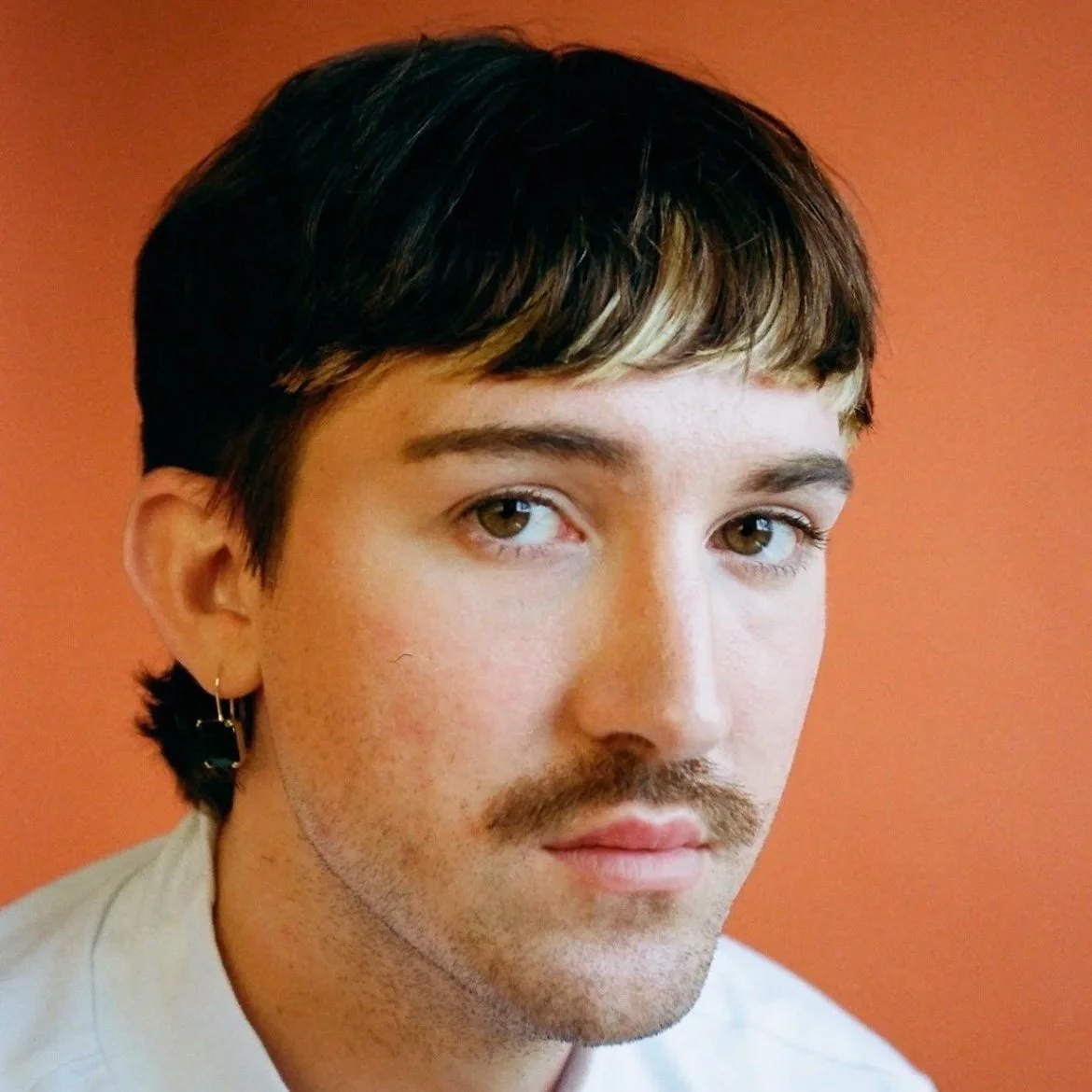
Head over to our first blog post to learn more about Foster.
Eve Rifkah, Worcester / United States, “Change of Address”
What compels you to pick up a pen or open your laptop to free-write? And what inspires/influences your writing, particularly when it comes to addressing human rights issues?
I relate to social and historical conditions and stories. With my unhoused poems as with my first book on a leper hospital on a remote island in MA I hope that my poems give voice to the unheard and help enable empathy for those in this plight.
In comparison, how does your intersectionality influence your view of the world (your personal beliefs, gender expression, religious affiliations, etc.)?
I believe that all humans deserve to be treated fairly and kindly. To be given respect irregardless of where they stand in the overall social order. I believe that governments should take care of all the population in need. That includes, housing, food, education, medical care. I get so angry that so many health care and decent living situations.
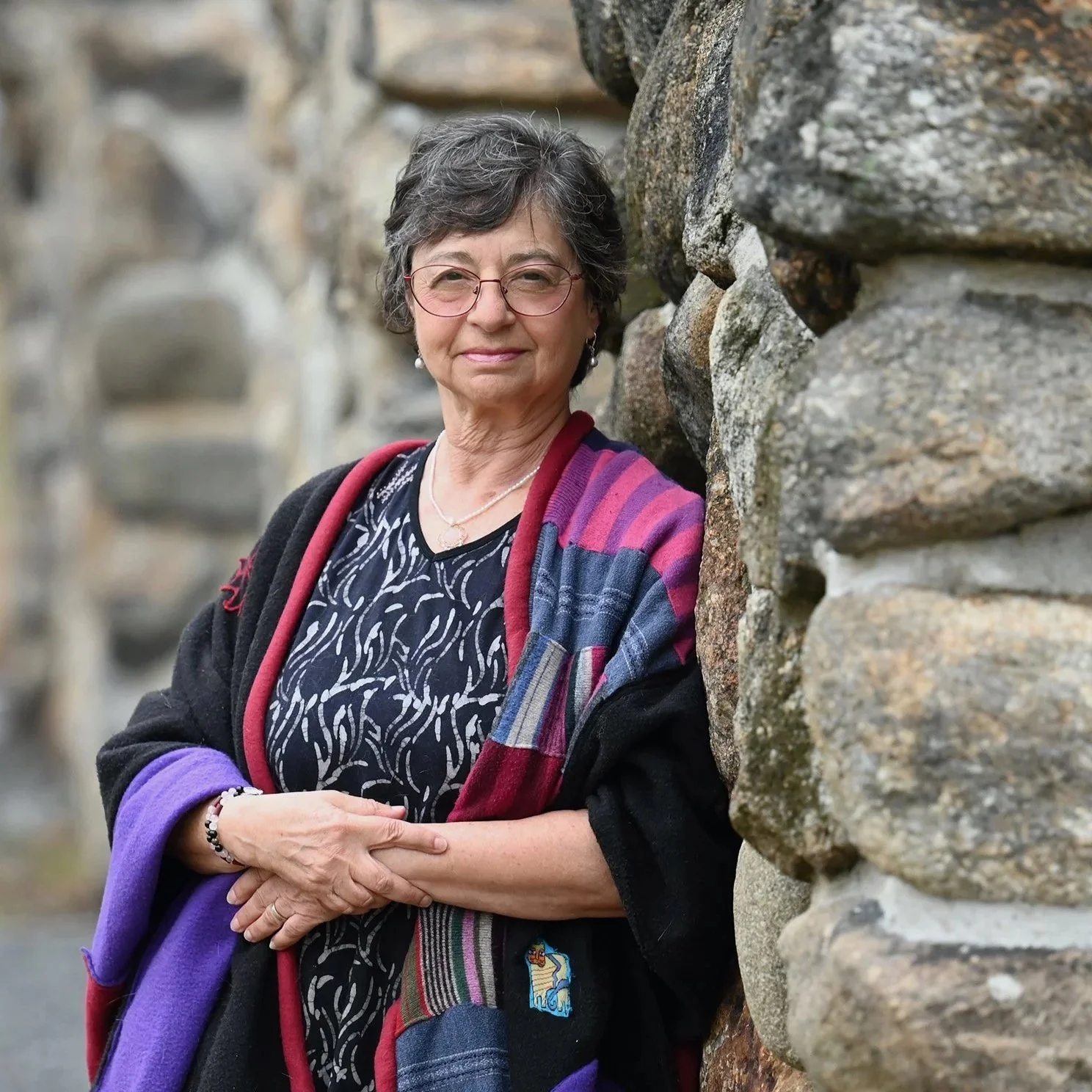
Head over to our first blog post to learn more about Eve.
Gloria Ogo, United States, "Things that Rot Beautifully"
What compels you to pick up a pen or open your laptop to free-write? And what inspires/influences your writing, particularly when it comes to addressing human rights issues?
What compels me to free-write is usually a sense of pressure, something unresolved, unspoken, or circling that won’t let me move on until I give it language. Writing becomes a way of listening rather than declaring, a space where I can follow tension, memory, and contradiction without having to resolve them too quickly. When it comes to human rights, my work is shaped by lived proximity rather than abstraction: inherited histories, domestic spaces, silences, and the everyday negotiations people make under systems that limit their choices. I’m influenced by writers who refuse sentimentality and instead render harm, survival, and dignity with precision, allowing the human cost of policy, conflict, and inequality to emerge through voice, place, and intimate detail rather than overt argument.
In comparison, how does your intersectionality influence your view of the world (your personal beliefs, gender expression, religious affiliations, etc.)?
My intersectionality shapes my worldview as a constant act of translation—between belief and doubt, visibility and erasure, inheritance and self-definition. Holding multiple identities at once has taught me that no single framework fully explains how power operates or how people survive it; experience is always contingent, shaped by context and perception. My personal beliefs, and spiritual inheritances inform how I read vulnerability and authority, how I understand care, and how I question moral certainty. Rather than offering fixed positions, intersectionality pushes me toward attentiveness, listening for what is unsaid, recognizing how systems overlap, and understanding identity not as a stable category, but as something lived, negotiated, and continually becoming.
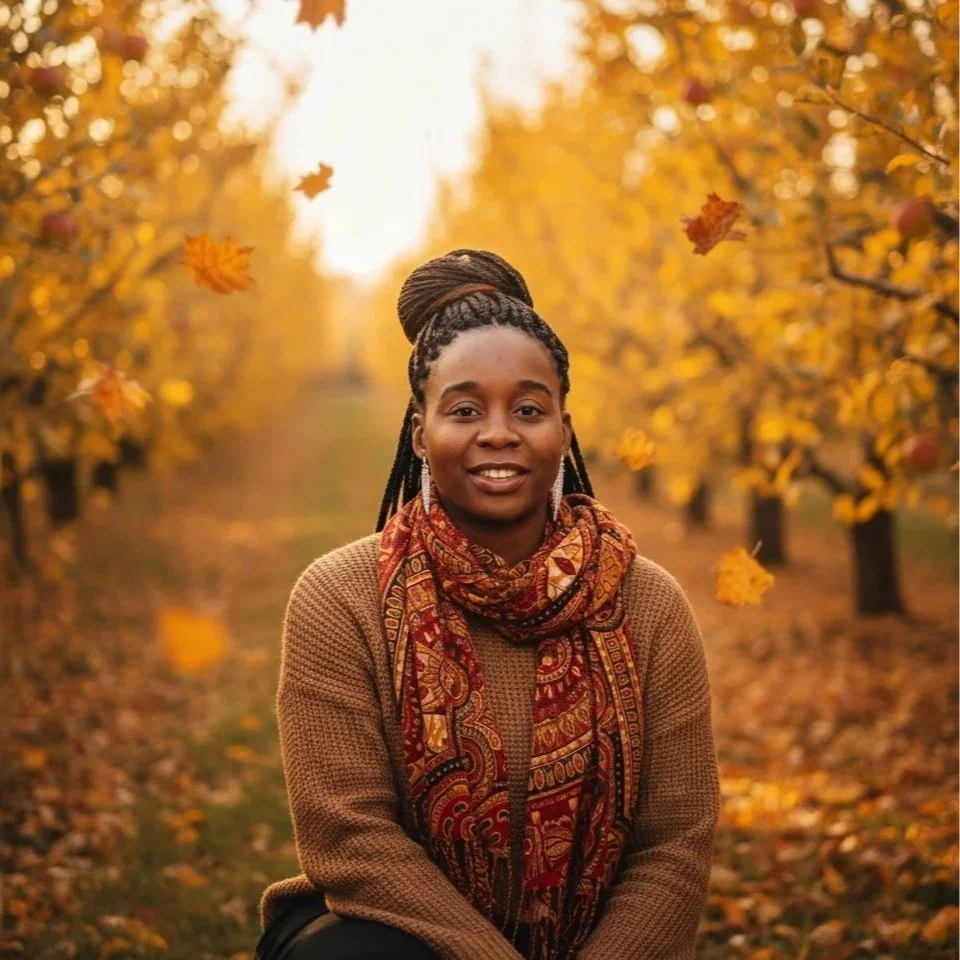
Head over to our first blog post to learn more about Gloria.
Cassondra Windwalker, United States, "There is Magic in the Shadows"
What compels you to pick up a pen or open your laptop to free-write? And what inspires/influences your writing, particularly when it comes to addressing human rights issues?
Stories power our world - they're the foundation of our history and the scaffolding of our present, the engines of our future. But stories are ephemeral. When I catch a snatch of a story adrift on the wind, I do my best to pin it to the page before it vanishes. I want to hear what it says to me, and I want to give it enough volume for it to speak to others.
In comparison, how does your intersectionality influence your view of the world (your personal beliefs, gender expression, religious affiliations, etc.)?
I am grateful to live an ever-becoming life. The woman I was thirty years ago and twenty years ago and even ten years ago passionately believed all sorts of often silly and often hurtful things this woman does not. And if I'm doing life right, if I'm still here in another ten years, I'll understand so much more that baffles me now. Every person I meet, every road I travel, illuminates my vision and broadens my gaze. We have to push ourselves into uncomfortable and even hostile spaces if we will take on new shapes. And I hope to always be new.
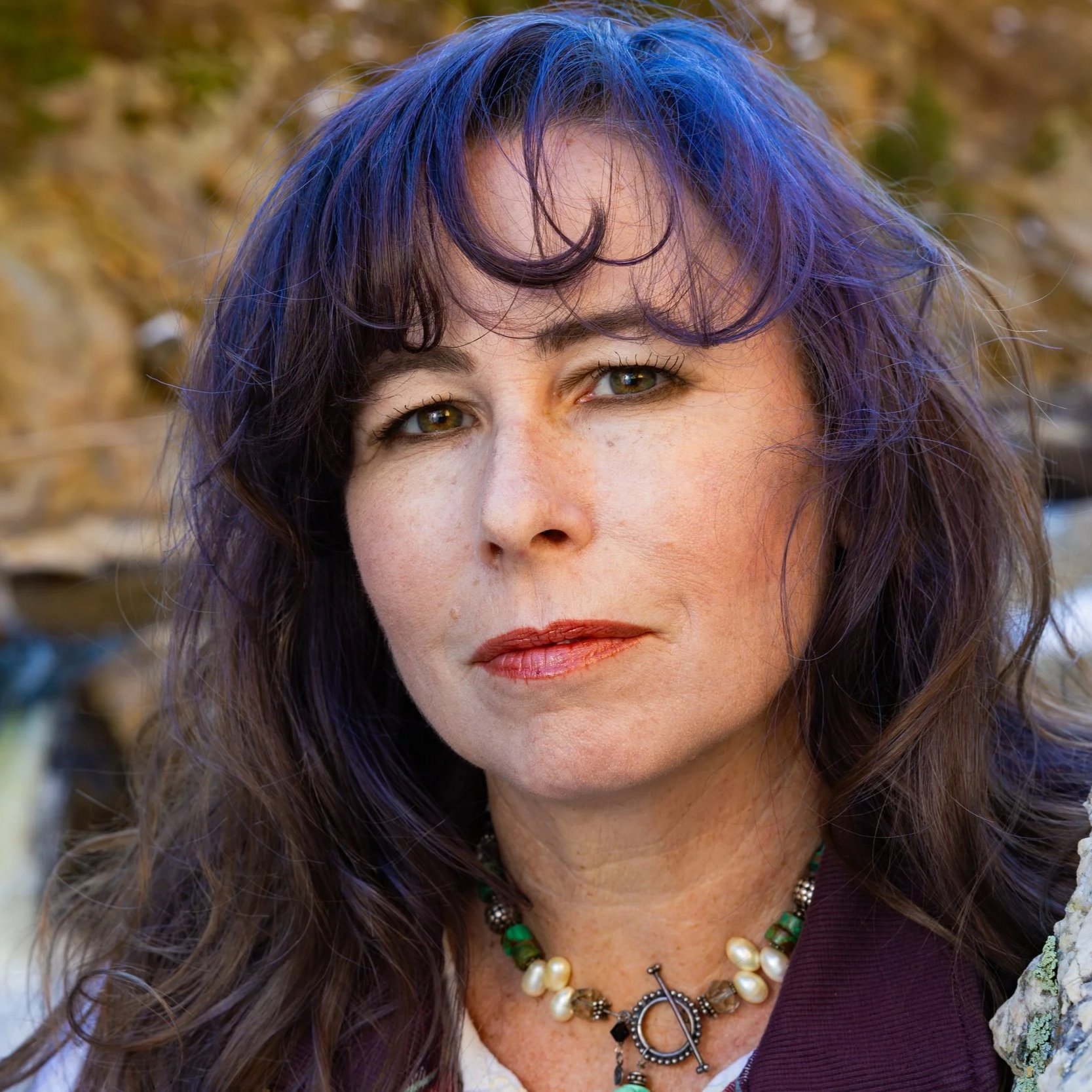
Head over to our first blog post to learn more about Cassondra.
Vidya Hariharan, (Mumbai) India, “Abandoned”
What compels you to pick up a pen or open your laptop to free-write? And what inspires/influences your writing, particularly when it comes to addressing human rights issues?
It’s my anger against the injustice I see around me that compels me to write poetry. The innocent people who suffer due to apathetic systems and approaches which destroy lives unnecessarily, my voice rises against such crimes.
In comparison, how does your intersectionality influence your view of the world (your personal beliefs, gender expression, religious affiliations, etc.)?
As a woman living in a city I am constantly amazed by the human activity around me. This city is my inspiration.
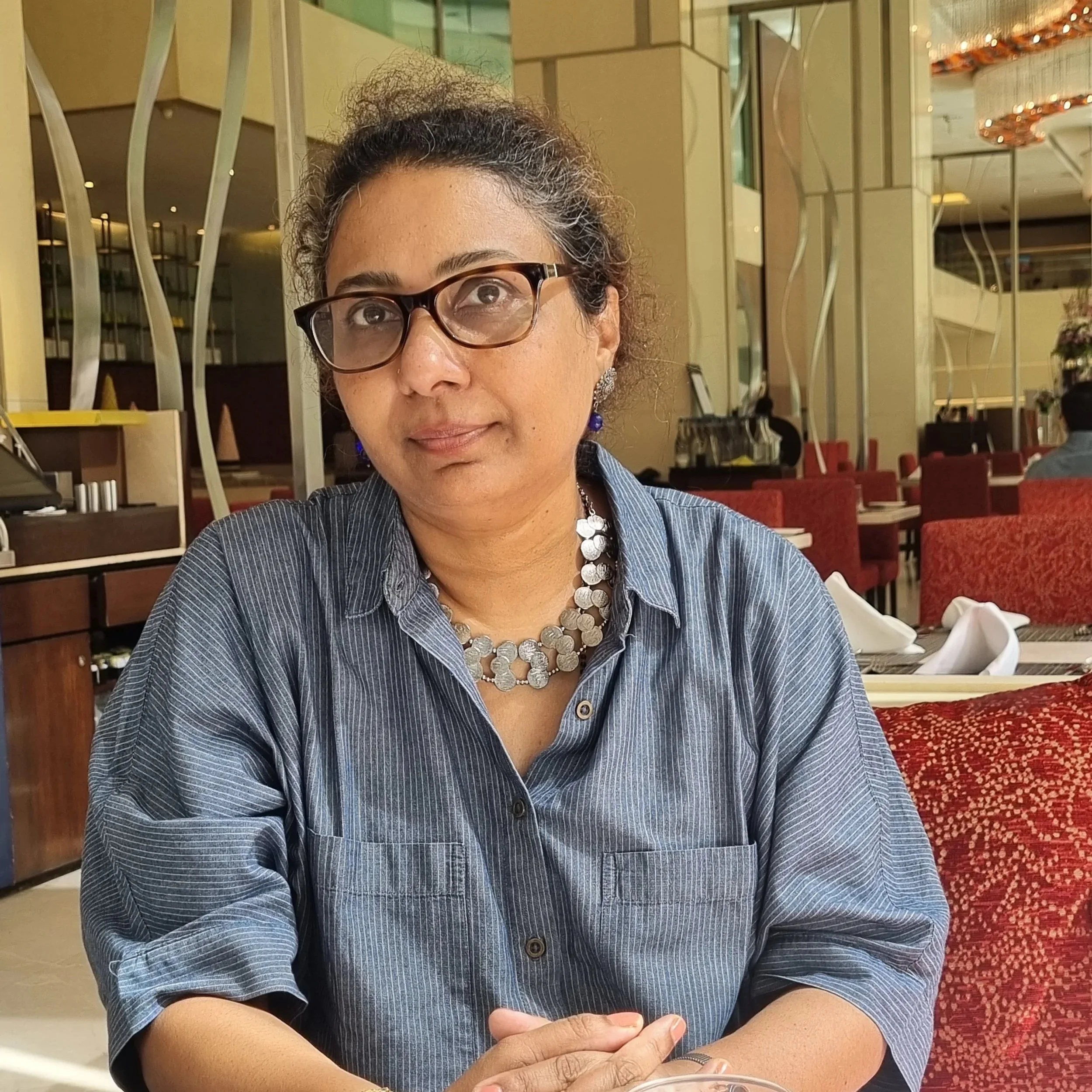
Head over to our first blog post to learn more about Vidya.
Constantinos N. Makris, Cyprus, “Lárites”
What compels you to pick up a pen or open your laptop to free-write? And what inspires/influences your writing, particularly when it comes to addressing human rights issues?
Writing, for me, is a method of inquiry rather than expression alone. I am compelled to write when language becomes the only adequate tool for examining power, belief systems, and the structures that shape individual and collective behavior. Human rights issues emerge naturally from this process, as they are inseparable from questions of authority, exclusion, movement, and historical memory.
In comparison, how does your intersectionality influence your view of the world (your personal beliefs, gender expression, religious affiliations, etc.)?
My worldview is shaped by the intersection of personal belief, cultural inheritance, and philosophical inquiry. Rather than foregrounding identity categories, my work examines how belief systems—religious, political, or technological—are constructed and maintained, and how they affect individuals within broader social structures.
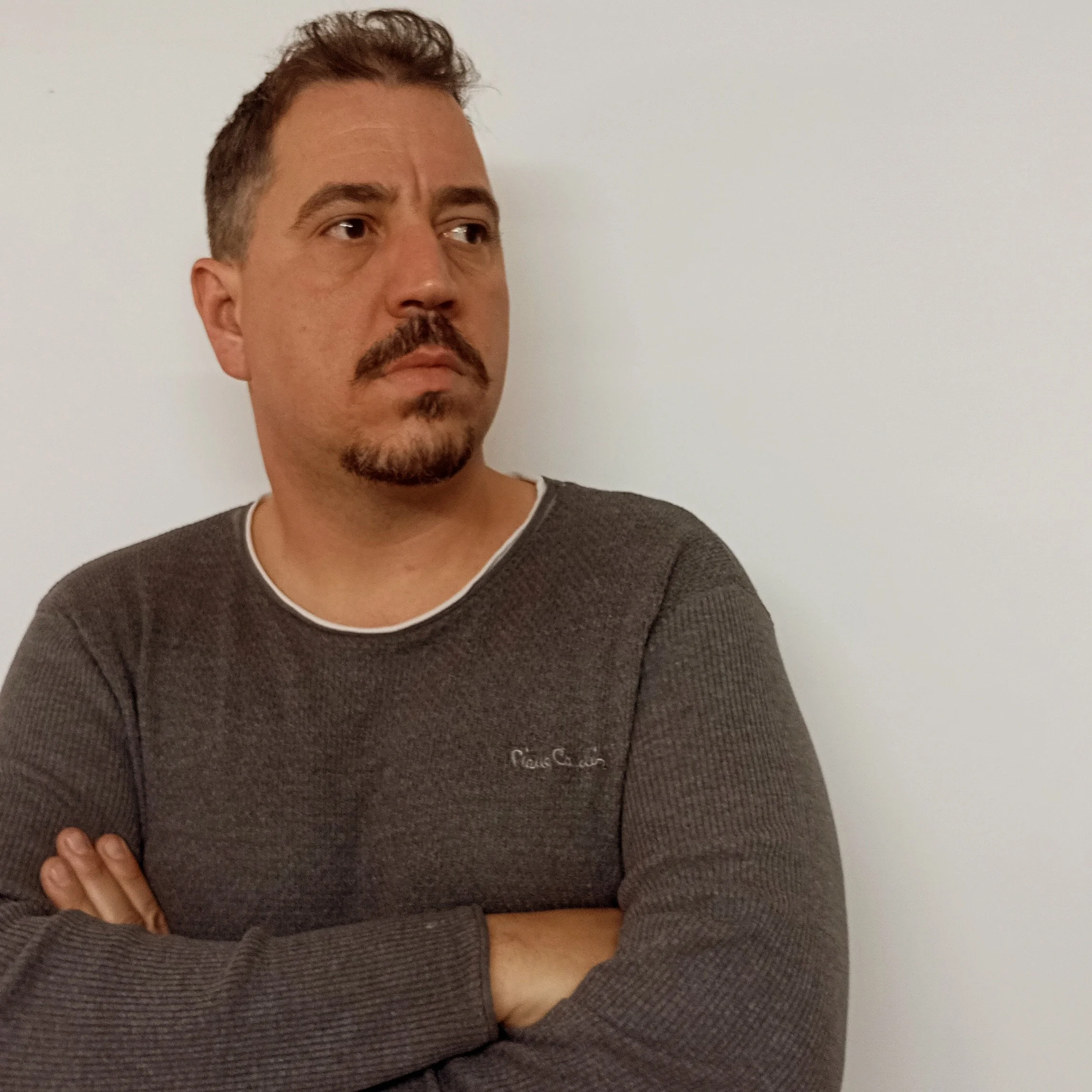
Head over to our first blog post to learn more about Constantinos.
David Anson Lee / Philosopet, (Texas) USA, “City of Unfound Doors”
What compels you to pick up a pen or open your laptop to free-write? And what inspires/influences your writing, particularly when it comes to addressing human rights issues?
What usually compels me to write is discomfort. Not pain exactly, but that low-grade moral static you feel when something in the world is slightly, but persistently, out of tune. I’ll see someone sleeping beneath a hospital ramp, hear a line of dialogue in passing, or notice a small, almost invisible injustice, and it won’t let me go. Free-writing is how I listen more closely. I start without a plan, just enough silence to let the language surface what I haven’t fully understood yet.
My background as both a physician and a philosopher strongly shapes how I approach writing. Medicine trained me to attend: to sit with people at moments when certainty disappears and dignity matters most. Philosophy taught me to live inside questions rather than rush toward answers. Together, they’ve made me wary of easy conclusions and deeply interested in how ethical questions actually show up in ordinary lives.
When I write about human rights, I’m less interested in argument than in witness. I want to place the reader inside a moment where abstractions fall away and a human being is unmistakably present. Poetry allows me to slow the world down long enough to notice what it tries to move past. If a poem can make a reader pause, recognize themselves in someone they might otherwise overlook, or feel a quiet shift of responsibility, that feels like a small but meaningful act of justice.
In comparison, how does your intersectionality influence your view of the world (your personal beliefs, gender expression, religious affiliations, etc.)?
I experience intersectionality less as a set of labels than as a continual negotiation between worlds. My personal beliefs have been shaped by holding multiple, sometimes competing, ways of knowing at once: medicine and poetry, science and philosophy, immigrant pragmatism and Indigenous awareness of land and history. That tension has taught me to distrust absolutes and to listen carefully before drawing conclusions.
As a man shaped by both Western medical training and cultures that value restraint, duty, and endurance, my gender expression has been influenced by models of quiet responsibility rather than performance. Strength, for me, has come to mean attentiveness, reliability, and the willingness to stay present in discomfort. These qualities inform how I approach both patients and poems.
Religiously and spiritually, I exist in a reflective, questioning space rather than a fixed affiliation. I’m drawn to ethical traditions that emphasize compassion, humility, and responsibility to others, principles that recur across faiths and philosophies. My upbringing taught me that belief is less about declaration than about how one lives: how one treats the vulnerable, how one responds to suffering, how one bears witness.
Being the child of immigrants who fled political violence has also made me wary of ideological certainty. I’ve seen how rigid systems: political, cultural, or religious; can erase individual lives in the name of purity or progress. That awareness has shaped my commitment to complexity and nuance, especially when writing about human rights. I’m interested not in slogans, but in lived contradictions.
Taken together, these intersecting identities have made me attentive to thresholds: where certainty breaks down, where identities overlap, where empathy is tested. They’ve shaped a worldview grounded in humility and curiosity. I write from the belief that justice begins not with knowing the right answer, but with learning how to listen, especially to voices that exist at the margins of power and language.
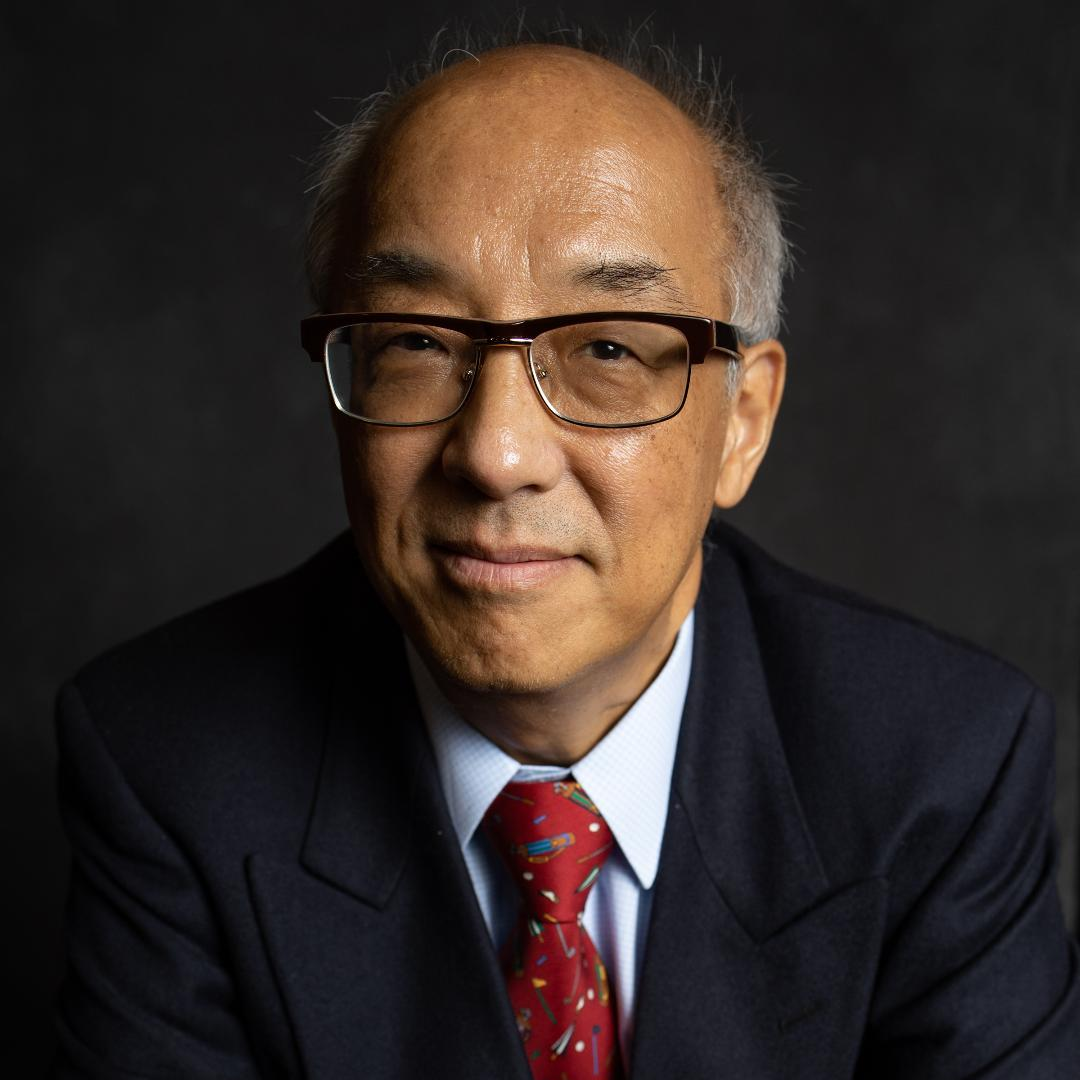
Head over to our first blog post to learn more about David.
Stay tuned on Instagram
Discover new stories from up-and-coming writers.
Join our movement in supporting underrepresented voices.