Writer Feature: Jordan Redekop-Jones
The Writer's Notebook
*
The Writer's Notebook *
Make it stand out
Whatever it is, the way you tell your story online can make all the difference.
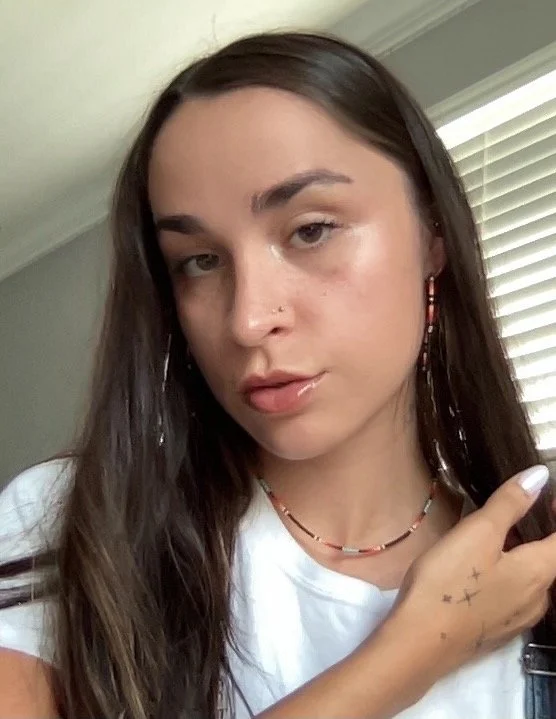
Jordan Redekop-Jones is a Canadian, Mixed-Indigenous winner of the 2024 Austin Clarke Prize in Literary Excellence for Poetry and the 2024 Indigenous Voices Award in the unpublished poetry category. Jordan is also one of IHRAM Press’s treasured writers. In this interview, she shares her musings, inspiration, and honest thoughts on her experience with us as an author and activist.
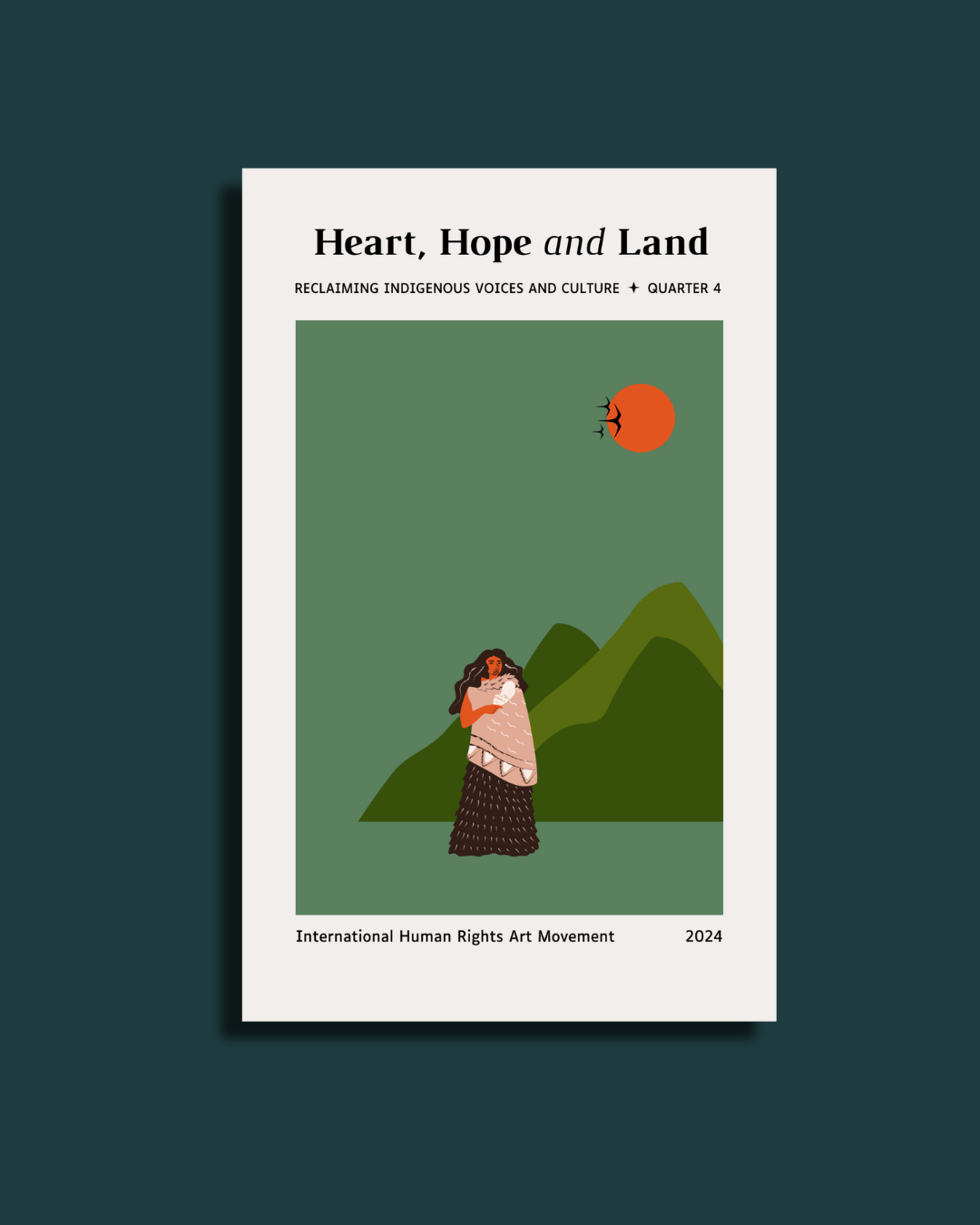
Her latest publication with IHRAM Press, “The Holy Northern Star is a Burning Statistic,” is featured in the IHRAM Quarter 4 Literary Magazine: Indigenous Voices.
Thank you for all you do, Jordan.
Now, be honest, how has your experience been with IHRAM Press? How did you find us, and why did you choose to publish with us?
My experience with IHRAM Press has been wonderful. I saw a post on Instagram that mentioned a call for Indigenous writers and I was immediately intrigued. I decided to publish with the IHRAM Press because I love what they stand for. I am very happy I decided to publish my work through their press.
Would you recommend IHRAM Press to other writers/artists?
I would absolutely recommend IHRAM Press to other writers! It was a really wonderful experience.
Share a quote from your poem published in IHRAM Literary Magazine 2024!
“You, mixed girl dreaming
press out of a womb of othering
and split the sky with your teeth…”
Now for the fun questions! What compels you to pick up a pen or open your laptop to free-write? And what inspires/influences your writing, particularly when it comes to addressing human rights issues?
Grief, joy, love, anger. These are all reasons that I write. I have long been interested in human rights issues because I don’t think it should ever be a question that everyone is given the freedom they so rightly deserve. Because of my own complex cultural identity, I often find myself questioning the establishments that have taken away my own ability to reconnect with my cultures. I spent a lot of time blending in and not digging deeper into my ancestry because I was afraid of what answers I might find. The instances of negativity that I have faced during my reconnection have only inspired me to write more because I am certain that there are others out in the world who have faced the same struggles I have. It has also made me appreciate those who have advocated for me even more. I want to be able to support individuals who may be struggling with their cultural identity, like I have. I hope my writing can do that for someone.
The human rights concerns addressed in the IHRAM literary magazine are often complex and challenging to navigate. How do you navigate the balance between highlighting these challenges and maintaining a sense of hope or optimism in your writing?
I always try to maintain a sense of hope in my writing because I believe it to be something that can be found in every situation. I find it necessary to look for the light in everything, and in turn, I have been able to see it everywhere, even if it first accumulates slowly. There are many instances of dichotomies in this life, and I often find myself existing in extreme instances of grief and joy. Because of this, I have found hope to be a useful tool even in times of deep distress. I believe there is always a reason for the struggles we face, and mine have often come out in my writing again and again, even when it is not intentional. Art is really good at creating that necessary balance all on its own.
How do you personally connect with our mission? Particularly on the power of art and literature to influence social change, and our values of beauty as a fundamental creative principle, sincerity, vulnerability, celebrating diversity, and opening doorways of engagement.
It took me a long time to find something that combined my love of art and literature as well as social justice. I didn’t believe that my own words might have the power to create any sort of change, and I’m still unsure if they do. However, I do believe that writing is a vital instrument that can help shape the world around us. It can take anything and make it beautiful, intricate, and deeply meaningful, which I believe to be an act of pure, mortal magic. I love that the IHRAM highlights so many unique and important voices from the world. It is truly amazing to see how art connects us all as human beings.
The IHRAM magazine aims to celebrate authors contending with their identities within the context of their environments. How does your environment influence your view of the world (your home country, city, and surrounding culture)?
I have always lived in a place that is comprised of many different cultures, but I would say that my view of the world was most profoundly influenced by my time spent travelling the world as a child. If anything, being around so many different cultures has given me a rich sense of community and identity, even when I haven’t always felt like I belonged in my own cultures.
In comparison, how does your intersectionality influence your view of the world (your personal beliefs, gender expression, religious affiliations, etc.)?
My own intersectionality influences me greatly. As a multiracial woman who has been displaced from her cultures, I have learned to adapt in many ways to whatever environment that is presented to me. I feel like a shapeshifter in that sense, because I have spent a long time not having many answers about what it means to be what I am. Being comprised of multiple cultures empowers me because I know that deep down I belong to many places and things I am only just discovering now. It makes me grateful to exist in this time, even when there are so many dark things going on in the world.
Support Activist Writers
*
Support Activist Writers *
Read and enjoy all of Jordan’s work:
hybridity as a phantom body (The Ex-Puritan / 2024) and many others that appear in Prism International, Arc Poetry, SAD Mag, and Canthius.
You can find Jordan on Instagram.