
Writer Feature: Nathaniel Spencer-Cross
The Writer's Notebook
*
The Writer's Notebook *
Nathaniel Spencer-Cross is a Montreal-based author. He is one of IHRAM Press’s treasured writers. In this interview, he shares his musings, inspiration, and honest thoughts on his experience with us as an author and activist.
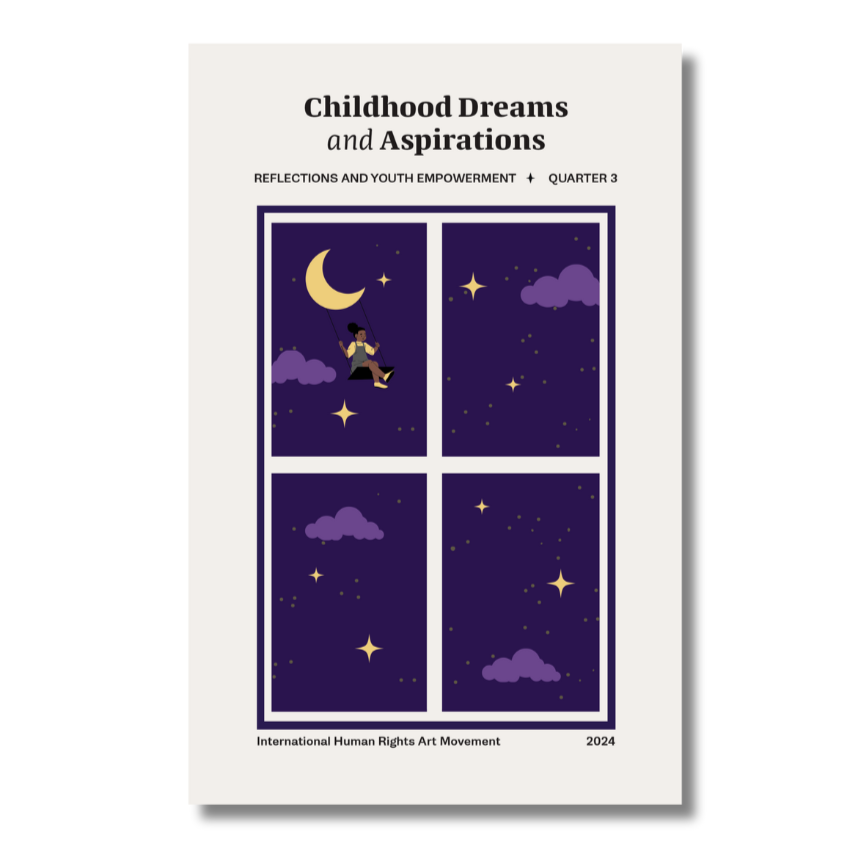
Nathaniel’s latest publication with IHRAM Press, “Chamelemom,” is featured in the IHRAM Quarter 3 Literary Magazine: Childhood Dreams and Aspirations.
Thank you for all you do, Nathaniel.
Now, be honest, how has your experience been with IHRAM Press? How did you find us, and why did you choose to publish with us?
Working with IHRAM was very efficient, professional, and courteous. They quickly replied to emails and queries, were flexible with edits, and most importantly, were easy to work with. I found IHRAM online, and after reading up on a few of their previous quarterly magazines, decided they would be a good home for my story. The fact that they actually pay artists for their work is a big plus in a world of rapidly shrinking print media.
Would you recommend IHRAM Press to other writers/artists?
I would definitely recommend IHRAM to any and all artists looking to publish their work. The quality of their magazines is top-notch, and the staff are all lovely to work with. I personally had a great experience with IHRAM.
Share a quote from your poem published in IHRAM Literary Magazine 2024!
“When I would call to her in those later years, she would stay hidden. Not in fear of her son though. She hid like prey from a predator. Her bulbous eyes open and still. Watching a monster call a name unrecognizable.”
Now for the fun questions! What compels you to pick up a pen or open your laptop to free-write? And what inspires/influences your writing, particularly when it comes to addressing human rights issues?
Inspiration for writing can be a tricky thing to pin down, but I would say that for me, writing serves as a means of working through things. Writing offers a quiet place in an overactive world. It’s a place of deep reflection and imagination. It’s a way to work through your day, your week, your life. The task can sometimes be daunting, but it’s one which I think every individual can benefit from. Lots of people tell me they used to love writing; I’m sure they still would if they picked up the pen again.
The human rights concerns addressed in the IHRAM literary magazine are often complex and challenging to navigate. How do you navigate the balance between highlighting these challenges and maintaining a sense of hope or optimism in your writing?
I’m not entirely convinced writing is meant to generate or inspire hope. I think that hope on an individual level can come from highlighting the hopelessness of certain aspects of life. I would argue, personally, that writing can highlight not how good things can be, but rather, highlight how bad things can get. Hopefully, if writers illustrate the hopelessness of certain aspects of our world, we can inspire change.
How do you personally connect with our mission? Particularly on the power of art and literature to influence social change, and our values of beauty as a fundamental creative principle, sincerity, vulnerability, celebrating diversity, and opening doorways of engagement.
Writing is a place where complete honesty is required to generate unique and palatable content. This can be done in fiction, non-fiction, and poetry alike, but the separation between good and mediocre works, in my opinion, typically boils down to an author’s ability to honestly present themselves on the page. When writers censor themselves, they rob audiences of authentic work. Whether written, painted, spoken, or sculpted, the beauty of art comes from a place of vulnerability that the artist shares with their audience. There’s something very powerful about bearing your soul on your sleeve.
The IHRAM magazine aims to celebrate authors contending with their identities within the context of their environments. How does your environment influence your view of the world (your home country, city, and surrounding culture)?
Growing up in Canada, I feel very lucky to live in a first-world country with clean water, security, and a generally easy life comparable to the rest of the world. Of course, every country has its issues, and Canada is no exception. Growing up in Montréal, I’ve been exposed to a wide array of cultural and linguistic diversity, which feels completely normal to me as it was integrated into my life since the day I was born. I think being able to see and understand different cultures and peoples sets a foundation of tolerance, understanding, and acceptance.
In comparison, how does your intersectionality influence your view of the world (your personal beliefs, gender expression, religious affiliations, etc.)?
Again, my personal identity doesn’t interest me as much as the cultural and religious identities of those around me. I try to be more of an observer of others than an observer of the self. My identity doesn’t matter to me, and I don’t think it particularly matters to my readers. Growing up in one of few cultural melting pots of Canada taught me not to look inward for inspiration, but rather outwards. Of course, this is not to say that there is zero self-reflection in my writing. The author will always permeate the work, whether intentional or not, but my view of the world is generally influenced by the struggles of others, and trying to find ways to help them. I have it good enough. Hopefully, my work can inspire others.