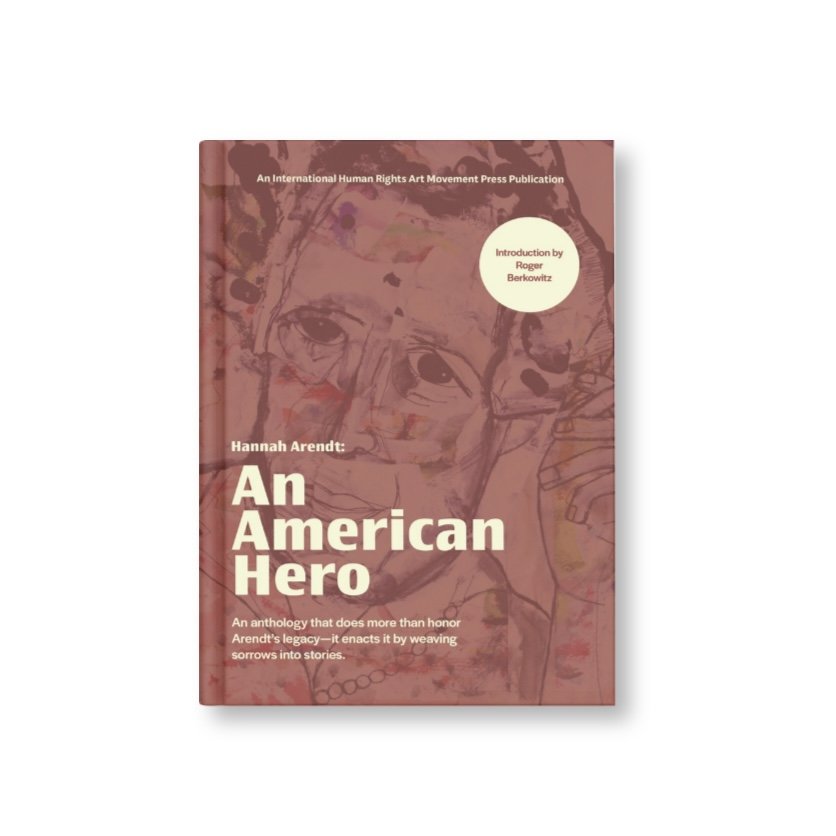

“Hannah Arendt: An American Hero”—Meet the Authors (Part 1)
What makes them write? The writers of “Hannah Arendt: An American Hero,” have responded. Inside the Collective is an on-going series dedicated to revealing what inspires and influences their writing and beliefs because the IHRAM Press is dedicated to diversity, community, and representation.
Meet Milo, Saharnaz, and the other writers: for them, writing is about vulnerability, equity, and resistance; stories that refuse to stay silent.
Milo Vidal, Belgium, “Not Saved”
Milo Vidal (b. 2000, Brussels) is a visual artist working at the intersection of poetry, photography, and political thought. With a background in philosophy, his work explores how vulnerability, responsibility, and human plurality take shape in everyday encounters. Since 2021, he has created street portraits of young people in cities such as Brussels, Sarajevo, and Berlin. He also publishes under the name Karma Coma, an ongoing artistic platform where personal and collective questions are answered through poetic-philosophical reflections and photographic portraits. Rather than aestheticizing suffering, his work seeks to transform it into a space of connection, dialogue, and shared responsibility.
What compels you to pick up a pen or open your laptop to free-write? And what inspires/influences your writing, particularly when it comes to addressing human rights issues? I write because silence becomes complicity if it lasts too long. Because what I witness asks to be carried, not explained away. My writing is shaped by encounters, by the faces that refuse abstraction, by the tension between thought and lived reality. Human rights are not ideas to me. They are the measure of whether we still recognize each other as human.
How does your intersectionality influence your view of the world (your personal beliefs, gender expression, religious affiliations, etc.)?I'm not very disciplined about identity. I don't hold it together in clear categories. I move through the world quite easily, and I'm aware that this ease is not neutral. It shapes what I see and what I might miss.
That’s where intersectionality enters for me. Not as something I define, but as something I try to stay attentive to.
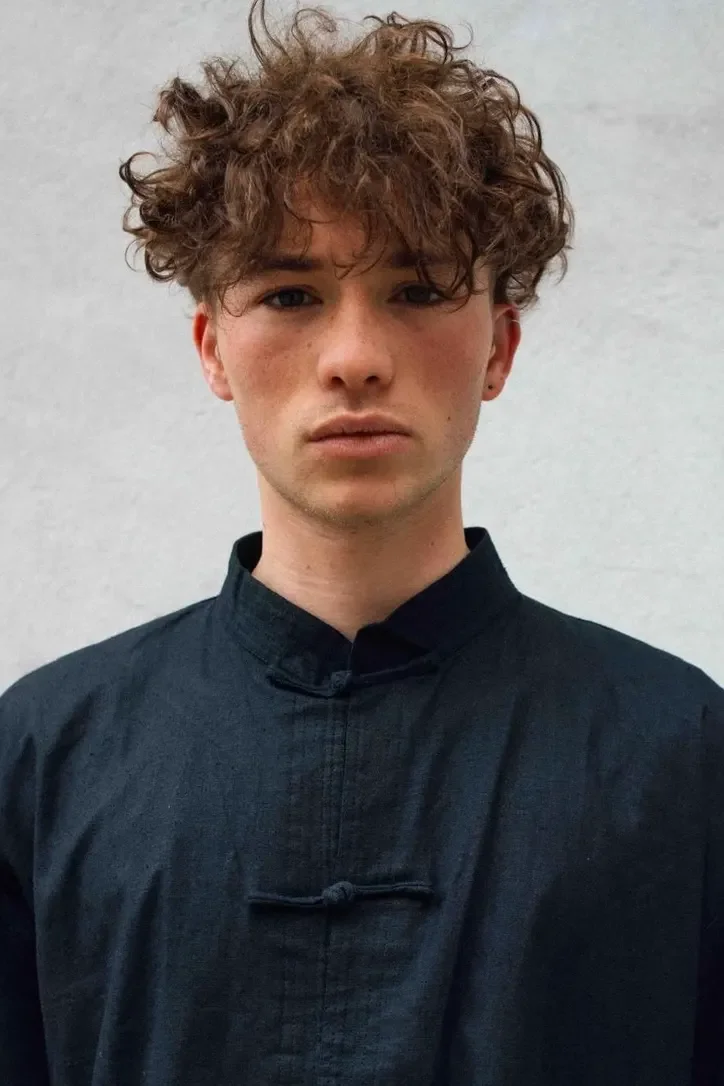
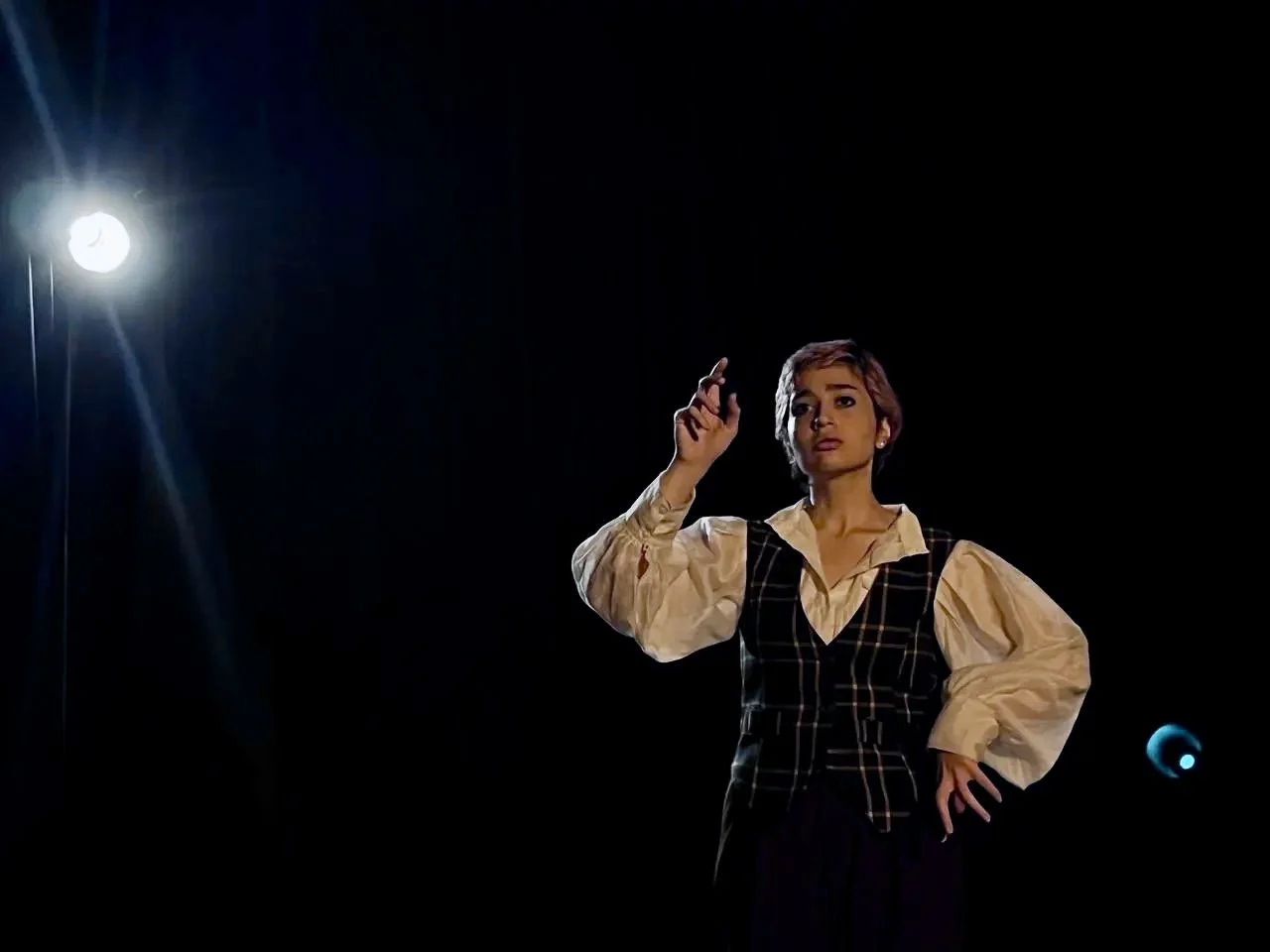
Saharnaz Omran, Iran, “To Appear Once More: To Be a Woman, To Be Free, To Be Heard”
Saharnaz Omran is a multidisciplinary artist working across performance, theater, writing, visual arts, and experimental film. Born in Amol, she was raised in an intellectual household shaped by her father, a writer and theorist of Persian literature and myth. Her work is grounded in philosophy, ritual, and embodied experience, treating the body as a site of narrative and resistance. After moving to Tehran at eighteen, she began exploring visibility, spatial politics, and women’s lives under constraint. Following the 2022 Woman, Life, Freedom uprising, she developed work outside formal structures, through intimate, independent performance contexts. She lives in Tehran.
What compels you to pick up a pen or open your laptop to free-write? And what inspires/influences your writing, particularly when it comes to addressing human rights issues?Do we still write after the catastrophes and deaths unfolding in our own land? Writing is no longer a form of pleasure, nor even necessarily of release. I write because the shame of survival continuously consumes me. It is not about expression in the traditional sense anymore, but about trying to stay in relation with what has been lost, and with what continues to happen.
How does your intersectionality influence your view of the world (your personal beliefs, gender expression, religious affiliations, etc.)?My sense of the world is shaped by living at the intersection of identities that are never allowed to settle into simplicity.
Being a woman, an Iranian, an artist—these are not separate layers I can switch between, but overlapping conditions that continuously reshape how I see and move through reality. Each of them carries its own history of visibility and erasure, of being spoken for and being silenced.
Because of this, identity is never experienced as fixed. It is something negotiated in real time—between what is expressed and what must be withheld, between what is visible and what is sensed beneath the surface of language.
This constant negotiation has made me attentive to contradiction. I do not see the world in stable categories, but in shifting thresholds: between presence and absence, voice and interruption, permission and refusal.
In that instability, I find both constraint and clarity. Constraint, because nothing can be fully declared without consequence. Clarity, because everything becomes more charged, more deliberate, more visible in its fragility.
So my perspective is not a unified position, but a tension that I inhabit. And perhaps it is within that tension that meaning becomes possible at all.
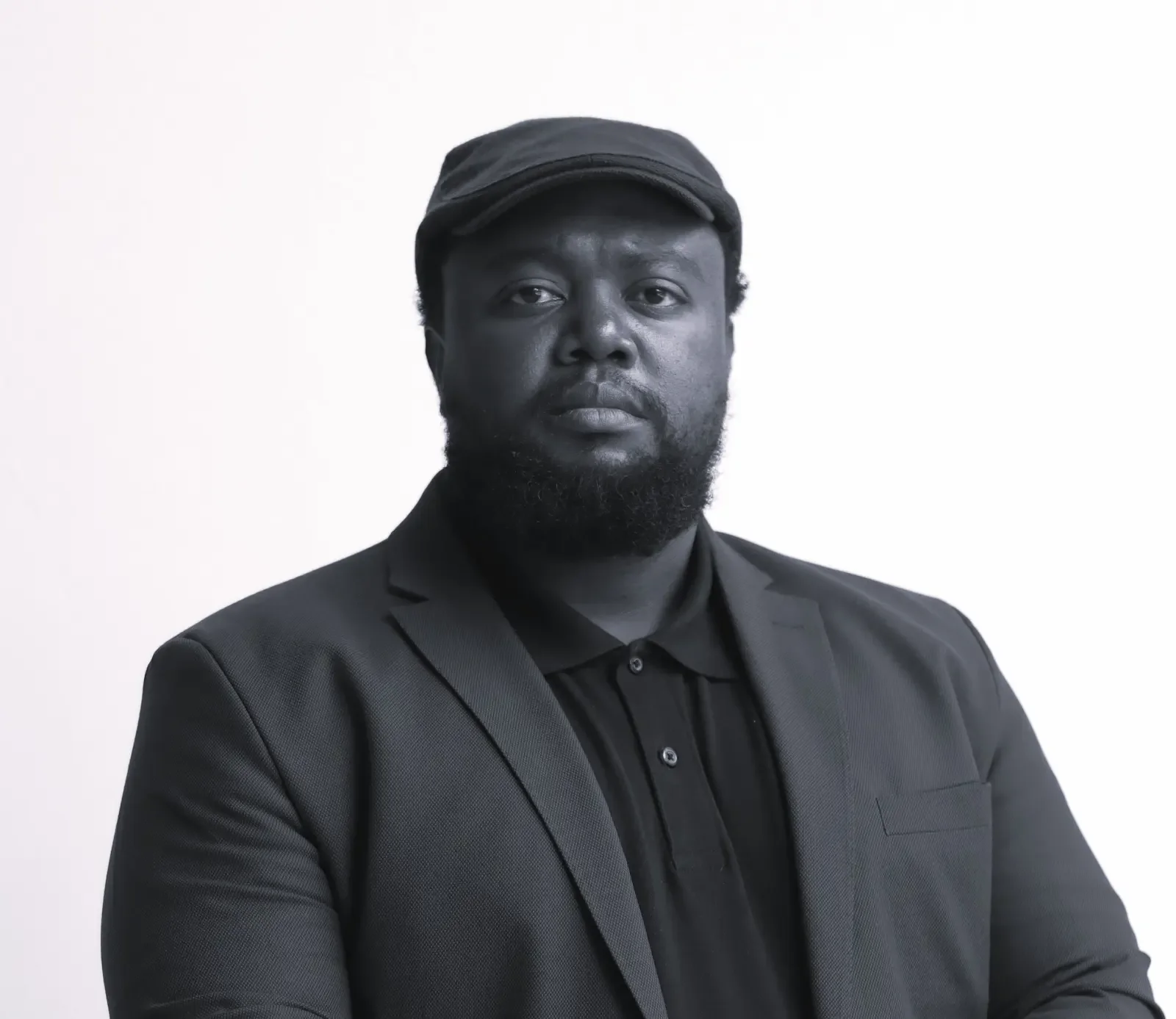
Kgomotso Jackson Phillip Sebola-Samanyanga, South Africa, “The Truth That Feared No Lies”
What compels you to pick up a pen or open your laptop to free-write? And what inspires/influences your writing, particularly when it comes to addressing human rights issues?To be honest, I am not inspired. I am not influenced. I am instructed; this instruction is Ancestral. It carries the weight of obligation. When I write or teach, it is because my Ancestors will not let me rest. Besides my Parents, who constantly remind me of what is and what needs to be done, it is my Grandparents and Ancestors who were displaced from the land that bore their names long before any colonial cartographer arrived with lines and Roman-Dutch script.
They instruct me. And their instruction is this: write and teach truth, that which matters to our children and to our children's children.
And what matters? What has always mattered, and what polite academic discourse too often softens into abstraction. It is the black body’s lived experience that is rearranged with its land, language, law, identity and ontology. It is the lived experience of colonial-apartheid, not just as policy, not just as juridical violence, but as a doctrine of dehumanization. And it is the colonial-presence in the spatial violence of our (s)places, in the curriculum our children are still forced to consume.
This is what I write toward. Not human rights as just a Western liberal framework, but human rights as land rights. As language rights. As the right of my Ancestors to exist. As the right of a Traditional Muvenda Man from Makhachkala to call out the ontological violence that is, without being labeled, angry, bitter, divisive, or uninspiring.
The violence done to this land, and the violence done to the people who are this land, is not a metaphor. It is material. It is in the soil of dispossessed farms. It is in the severed relationship between a people and the mountains, rivers, and Ancestors buried beneath the ground they can no longer access. To write about human rights in South Africa without writing about this rupture, this deliberate, calculated severing, is to write in bad faith.
So I write because I am told to. Because the Ancestors demand accountability from those of us who were given an opportunity to speak truth. I write to guide the process of unlearning lies. I write to return dignity to those the archive rendered voiceless. I write because silence, for those of us who carry this inheritance, is not neutrality. It is complicity.
And that, my ancestors, will not permit.
How does your intersectionality influence your view of the world (your personal beliefs, gender expression, religious affiliations, etc.)?As I navigate through the world, I do so as a Black body, specifically, a Traditional MuVenda Man from Makhado. My being is one with a spiritual heritage that connects me deeply to my Ancestors. They are not just a part of my history; they are a living presence in my life, constantly guiding me. This relationship with my lineage serves as a framework for understanding my identity and purpose, shaping the way I interact with the world around me. It is within this intersectionality that I find both my roots and sense of being.
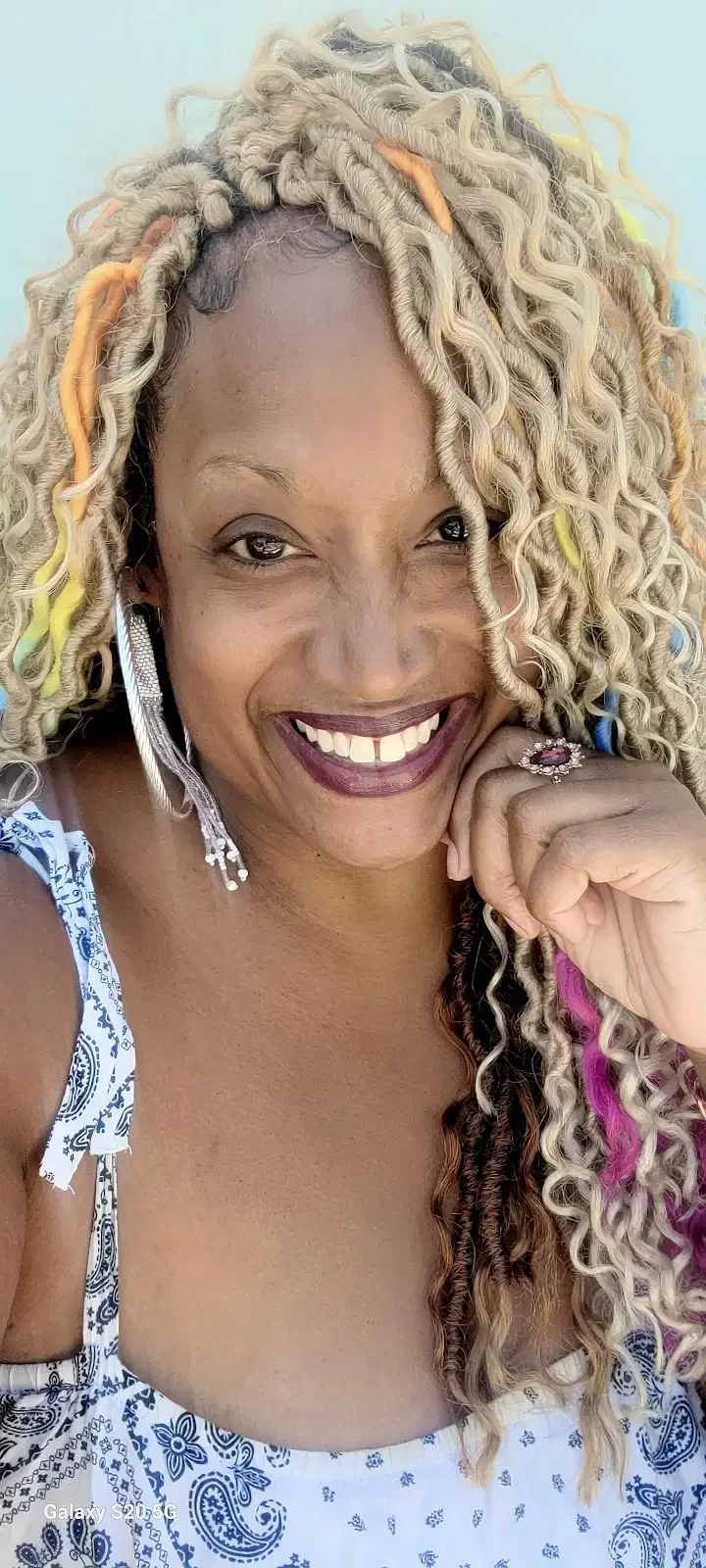
Tawanna Marie Woolfolk, USA, “Ordinary People Do Terrible Things Before Lunch”
Tawanna-Marie Woolfolk (LCSW) is a clinician, educator, and writer whose work centers the body as a site of moral intelligence and ethical discernment. With more than two decades of experience supporting individuals and clinicians through trauma, chronic illness, and systemic harm, she brings together embodied practice, social justice, and critical inquiry. Tawanna Marie’s work challenges conventional healthcare pedagogy by honoring interoception, relational accountability, and lived human experience. She teaches nationally on neuroception of safety and the ethics of care, and her writing lives at the intersection of poetic witness and cultural diagnosis.
What compels you to pick up a pen or open your laptop to free-write? And what inspires/influences your writing, particularly when it comes to addressing human rights issues?I don't begin writing from inspiration as much as from inability to unsee. Something becomes visible—often quietly—inside a room, a body, a system of care. A moment where harm doesn't announce itself as harm, but as certainty, as efficiency, as "this is just how it's done." Once I can feel that pattern in the body, it asks to be named. What compels me is the tension between what we say we value and what our bodies are actually experiencing in real time. My work sits at that intersection—where policy, culture, and relational dynamics meet the nervous system. Human rights, for me, are not abstract. They are lived through who is listened to, who is interrupted, who is believed, and whose discomfort is made invisible. I write to make those dynamics felt—not just understood—so that we can no longer move past them unconsciously.
How does your intersectionality influence your view of the world (your personal beliefs, gender expression, religious affiliations, etc.)?My lens is shaped by both my lived experience and my professional formation, but most importantly by the integration of the two.
As a clinician, I've been trained in systems that often privilege cognition over embodiment. As a human being, I know that our bodies hold truths that cannot be reduced to theory.
That tension has shaped my work.
I move through the world attuned to how power operates relationally—how identity, voice, and authority are negotiated moment by moment. I am especially attentive to how people are taught to override themselves in order to belong.
Intersectionality, for me, is not only about identity categories—it's about understanding how different forms of knowing are valued or dismissed, and how that shapes people's ability to remain in integrity with themselves.
It is this awareness that informs my commitment to helping people return to their bodies not just as sites of experience, but as sites of discernment, agency, and moral intelligence.
Stay tuned on Instagram
Discover new stories from up-and-coming writers.
Join our movement in supporting underrepresented voices.