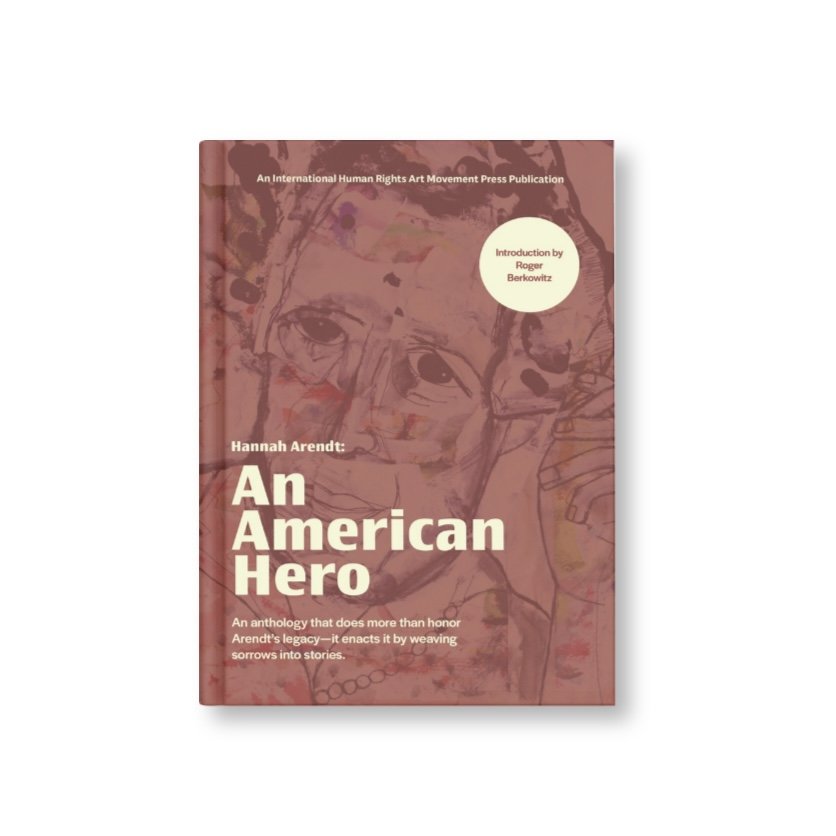

What makes them write? The writers of “Hannah Arendt: An American Hero,” have responded. Inside the Collective is an on-going series dedicated to revealing what inspires and influences their writing and beliefs because the IHRAM Press is dedicated to diversity, community, and representation.
Meet Volha and the other writers: for them, writing is about vulnerability, equity, and resistance; stories that refuse to stay silent.
Volha Kastsiuk, Belarus & New Zealand, “How Are You?”
Volha Kastsiuk is a Belarusian and New Zealand writer living in Aotearoa, New Zealand. She currently writes in English and Belarusian. Her first multilingual collection of short stories, “Oak Apples,” was published in September 2025. Her poems, essays, short stories, and translations have appeared in magazines, anthologies, and online publications worldwide. In her work, Volha mainly focuses on feminist writing, decolonization, and languages.
What compels you to pick up a pen or open your laptop to free-write? And what inspires/influences your writing, particularly when it comes to addressing human rights issues? I am a lucky Belarusian living in the free country of Aotearoa, New Zealand. Many Belarusians in Belarus are not able to speak up for freedom, so I decided to use my privileged territorial position and tell the rest of the world what is really happening in my birth country. The Belarusian people were my inspiration—those who fought and are still fighting for freedom.
How does your intersectionality influence your view of the world (your personal beliefs, gender expression, religious affiliations, etc.)?My family is Russian Orthodox. My grandmother was a very religious person, but despite this, she followed Christian principles more than the principles of the church institution. After Russia fully invaded Ukraine in 2022 and the Russian Orthodox church became supportive of such violence, I separated myself from the church and decided to follow my grandmother and Christian principles, which are connected to many other world religions. I believe that every person deserves freedom, though that may be viewed differently in different contexts. But as long as it doesn't go against morality, it's fine with me.
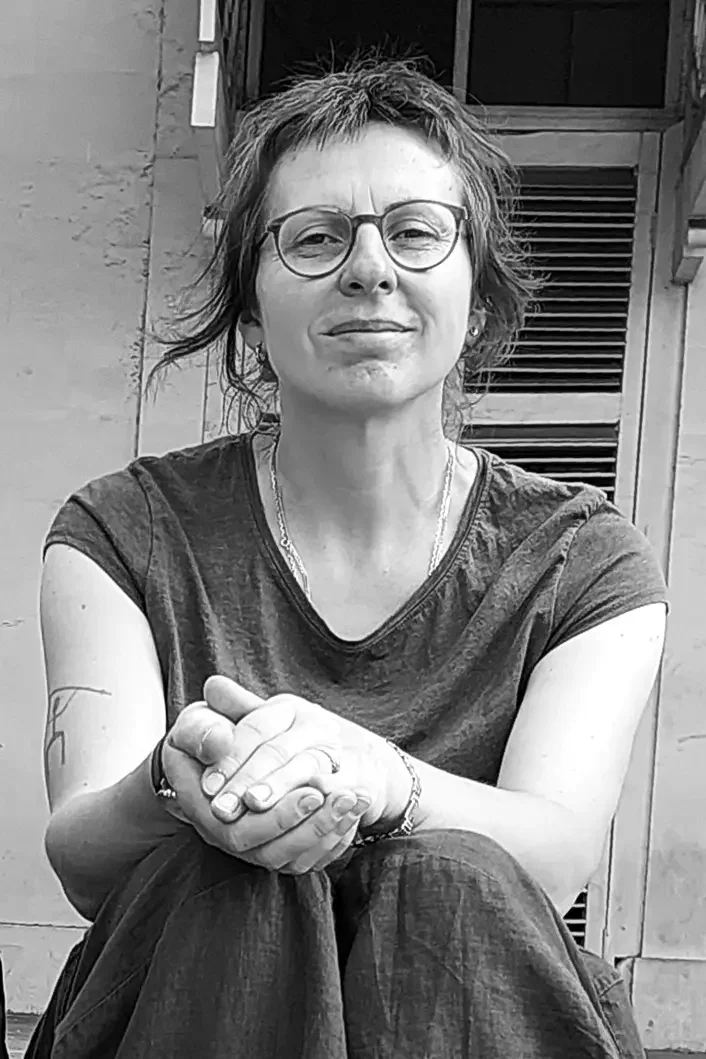
Shumaila Hemani, Pakistan, “Catabasis”
Dr. Shumaila Hemani is a Pakistani author and ethnomusicologist based in Calgary, Canada. She is the author of the memoir "Writing in the Wound: Acculturation, Trauma, and Music," named a favorite Alberta Reads (2025) by the Writers Guild of Alberta. She has also written for The Conversation, Canada’s National Observer, Arts Desk UK, and Women and Islamic Cultures. She was nominated for the prestigious Banting Postdoctoral Fellowship and is presently completing a monograph for Routledge’s Islam and Human Rights series on Sufi sound, shrine politics, and cultural rights in Sindh. Her research has received awards, including the Institute of Ismaili Studies Fellowship and the Asian Music Studies Award for Independent Scholars. She was named to Women in Music Canada’s Honor Roll in 2023.
What compels you to pick up a pen or open your laptop to free-write? And what inspires/influences your writing, particularly when it comes to addressing human rights issues?The inspiration behind Catabasis partly comes from Franz Kafka's “The Metamorphosis,” which I first read as an undergraduate student in Lahore, Pakistan. The image of transformation stayed with me for many years, and it returned powerfully as I navigated the long uncertainty of immigration limbo in Canada. Kafka's story captures the unsettling experience of suddenly becoming unrecognizable within the very systems that once seemed ordinary.
Over the past seventeen years, I have lived, studied, taught, and contributed to cultural life in Canada. Many of my colleagues who arrived as international students have since become permanent residents and citizens with Canadian passports. In contrast, my own status gradually diminished— from student to post-graduate work permit holder (barred from entering Canada during COVID) and then a visitor (at the time of writing this story) for three months and now back into being undocumented.
Another difficult realization came when I began sharing my story publicly. Some immigrant-serving organizations and community organizations treated me very poorly and circulated my story as a way to support internal funding narratives, rather than leading to meaningful support or structural change for the situation I was facing. That experience deepened my reflection on how stories of vulnerability can sometimes be instrumentalized within institutional systems.
In “Catabasis,” the protagonist's transformation into a squirrel expresses how bureaucratic and institutional processes can quietly strip a person of political recognition and dignity. Writing the story allowed me to explore the tension between the ideals of human rights and the lived realities of those who remain in prolonged states of limbo.
How does your intersectionality influence your view of the world (your personal beliefs, gender expression, religious affiliations, etc.)?As a Pakistani woman coming from a Muslim minority community and a minority ethnic affiliation, I find that my beliefs are often easily otherized in many of the spaces I enter. Because of this, I have learned to be attentive to the dynamics of power, voice, and belonging in every room I walk into.
Amidst growing divisiveness, I have come to value places where diverse voices are embraced. At the same time, I have also experienced how fragile these spaces can be. While voices may be heard, the stability and long-term impact of that inclusion often remain uncertain.
In many ways, the precarity I experience is rooted in the intersectional identities I carry. Alongside these minority positions of belonging, I consciously associate myself with my Muslim and Ismaili identity while also holding personal beliefs that are somewhat subversive-beliefs that place creative expression at the center of spiritual life rather than a purely ritualistic worship of the divine. Being a woman from Pakistan with a courageous outlook toward the world and a willingness to challenge systems of injustice has also, at times, left me feeling isolated and even socially ostracized.
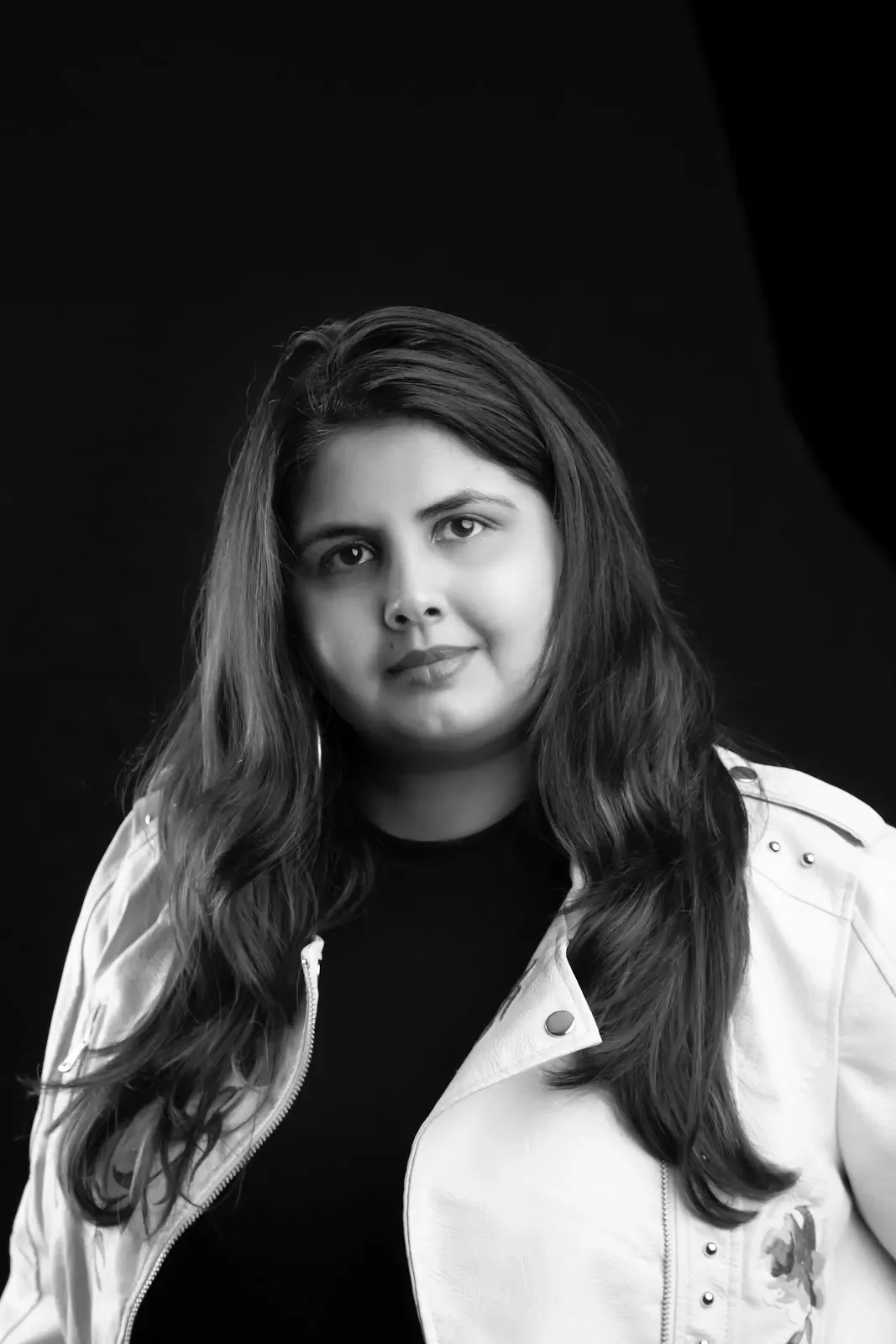
Argelia Salmon, Panama, “The Last Hour Before the Rain”
Argelia Salmon delves into the core of human resilience, giving voice to overlooked experiences shaped by memory, identity, and the moral responsibility to bear witness. Her work has been published in Open Secrets Magazine and featured in IHRAM Press’s acclaimed editions, including “Enduring Voices” (centered on life with disabilities and neurodivergence) and “Invisible Chains” (exploring contemporary slavery and forced migration). She is also the author of the reflective guide for writers, “Ink and Eternity: Reflections on the Writer’s Path,” available on Amazon. Her work blends emotional depth with social awareness, focusing on stories that honor human dignity and illuminate hidden truths.
What compels you to pick up a pen or open your laptop to free-write? And what inspires/influences your writing, particularly when it comes to addressing human rights issues?Most of the time, I begin writing when something refuses to leave my thoughts. It might be a memory, a quiet moment, or a story someone has shared with me. Writing becomes a way of understanding what those moments mean.
When it comes to human rights, the inspiration often comes from listening. Every community carries stories of resilience and struggle. Writing allows me to acknowledge those experiences and to remind readers that behind every issue or statistic there are real lives, real voices, and real histories.
How does your intersectionality influence your view of the world (your personal beliefs, gender expression, religious affiliations, etc.)?My perspective is shaped by several parts of my life that come together: my work as a writer, my studies in law, and my interest in human rights. These different paths influence the way I observe society and the questions I explore in my writing.
Writing allows me to reflect on memory, justice, and the responsibility individuals carry toward one another. Through stories, I try to explore how personal experiences connect to larger social realities, and how even small acts of courage can create meaning in the world.
Stay tuned on Instagram
Discover new stories from up-and-coming writers.
Join our movement in supporting underrepresented voices.