
Our Roots—Meet the Authors (Part 1)
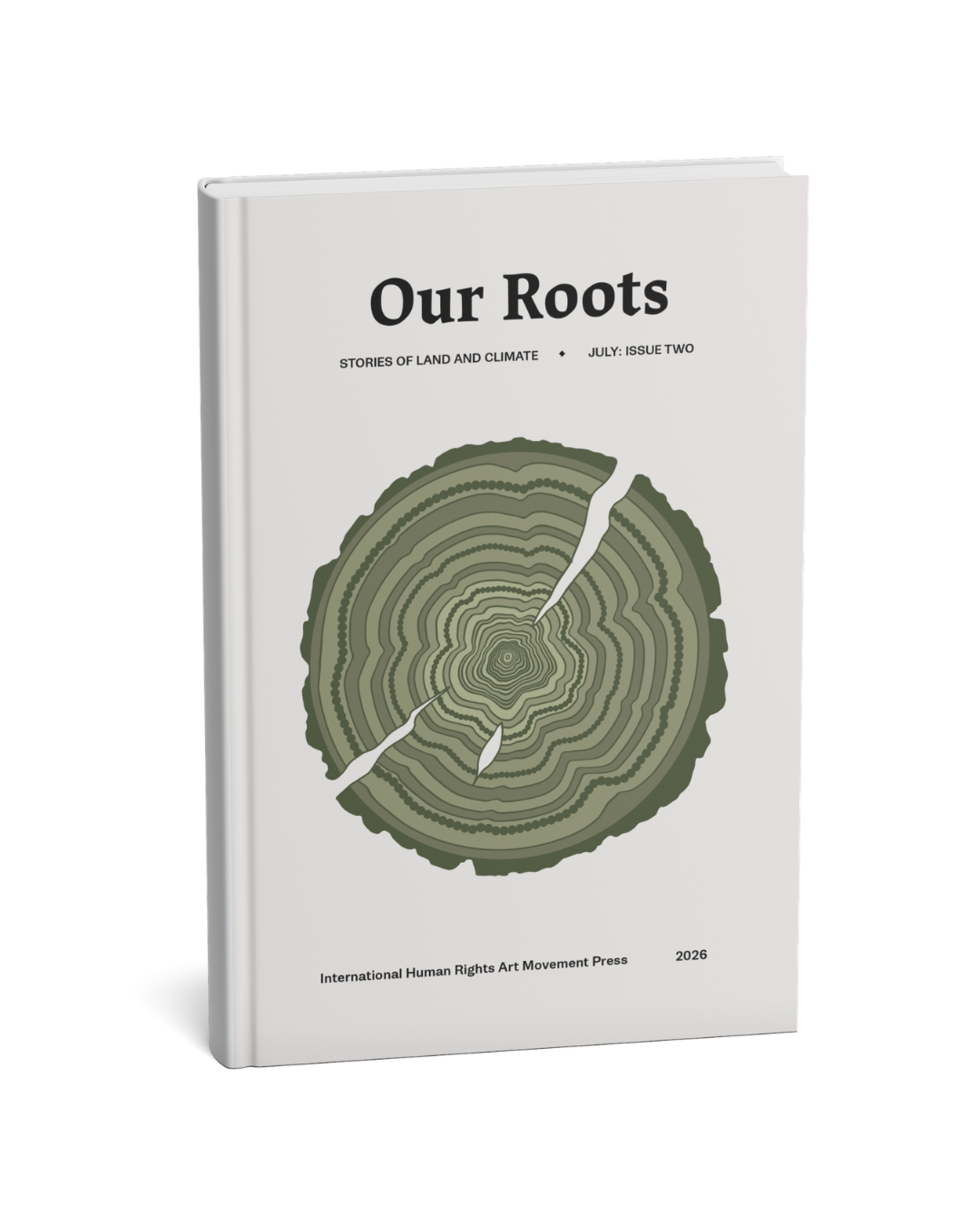
What makes them write? The writers of our recently released magazine, “Our Roots: Stories on Land and Climate,” have responded. Inside the Writing Process is an on-going series dedicated to revealing what inspires and influences our contributors’ writing and beliefs because IHRAM Press is dedicated to diversity, community, and representation.
Meet Sumaiya, Annie, and more of our inspired writers: for them, writing is about vulnerability, memory, and resistance; the danger of complacency.
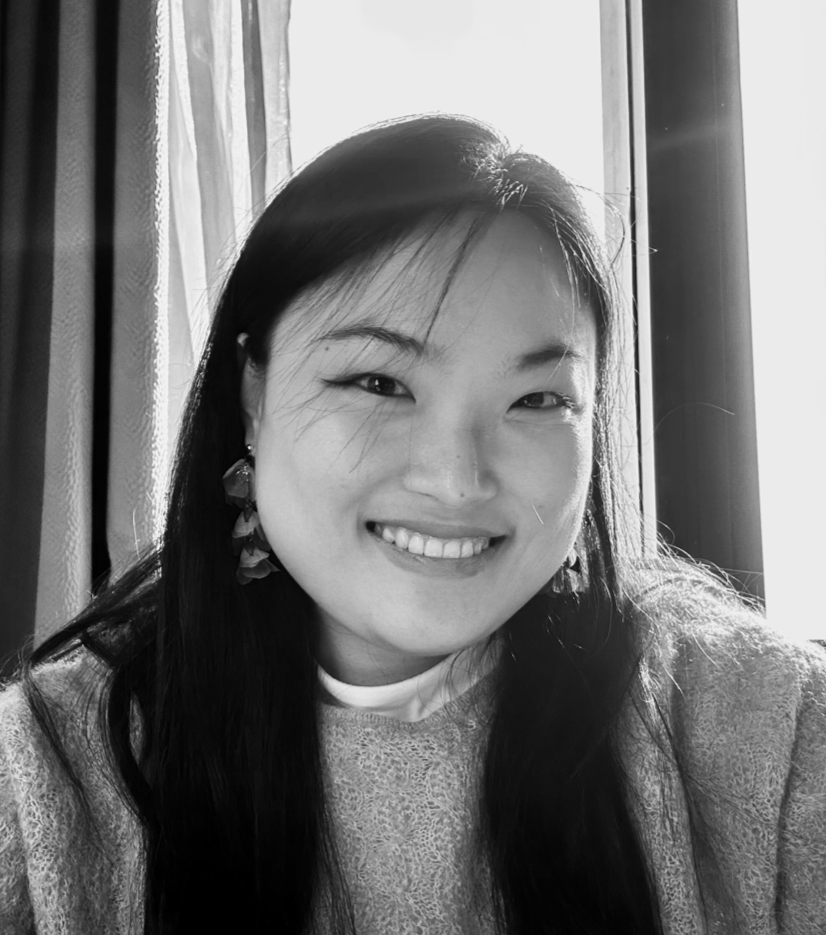
Sumaiya Khan, India, “The Protector”
Sumaiya is a writer from India whose work is inspired by the people and stories that surround her, exploring human rights, social issues, and the shared experiences that connect us. She believes writers have a responsibility to reflect the world honestly while offering readers a path towards hope, change, and a better version of themselves. Her collection of poems, Paper Boat, reflects her belief in the power of art to create connection and remind us that we are not alone in what we experience. Her writing can also be found on her Substack, The Blue Pen.
What compels you to pick up a pen or open your laptop to free-write? And what inspires/influences your writing, particularly when it comes to addressing human rights issues? Writing is my way of living life to the fullest. I am inspired by the people who surround me every day and whose lives fascinate me because of the sheer grace with which they go through it. Human rights issues is a very important facet in not just my writing, but also in what I read because as writers, our role is to serve as a reflection where the world can see itself and better it's ways.
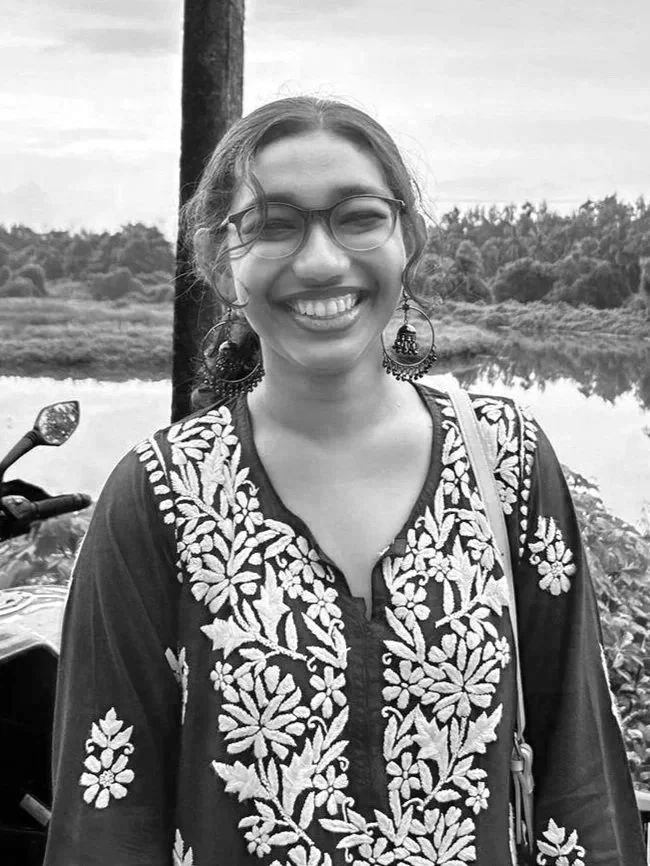
Annie ZH Sun, Malta, “Bitter Waters”
Annie is a writer from Malta whose work explores the spaces between dominant narratives, uncertainty, and the truths we carry as individuals. She sees writing as a way to create space for voices and perspectives that may otherwise be overlooked, while questioning the stories we are given about the world. Her fiction often confronts difficult realities but seeks to leave a spark of hope, reflecting her belief in the enduring power of stories to make the world a little easier to bear. Her work has appeared in Pseudopod, Flash Fiction Online, Flash Fiction Magazine, and Zoetic Press, and in the anthology Behind the Revolving Door: An Anthology of Choice.
What compels you to pick up a pen or open your laptop to free-write? And what inspires/influences your writing, particularly when it comes to addressing human rights issues?The world around me has already given me a narrative towards all its problems. Stories, especially those concerning major world events, are often told by people of power, and to them, that is the truth but it is not mine. The act of writing to me is the attempt of carving out a space for existence. In this space, I can probe, test, and withhold many truths at the same time and it inspires me to create. While I am often skeptical over the amount of power my voice holds in this reality, my believe in the power of stories never wavers.
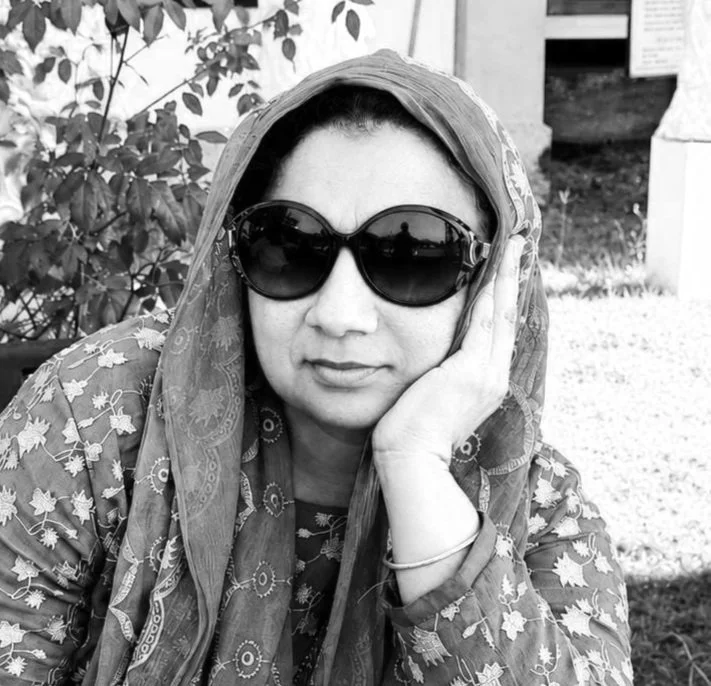
Zeenath Shiffani Abdul Razack, Sri Lanka, "The Herd”
Zeenath is a Sri Lankan Muslim writer and poet whose work is shaped by her experiences of conflict, displacement, and the lasting impact of war on ordinary people. Her writing explores themes of justice, dignity, resilience, identity, and the shared human cost of suffering, giving voice to stories that are often overlooked. She draws on her faith and heritage to advocate for compassion, accountability, and reconciliation, believing that literature can foster empathy and preserve memory. Her poetry has been published in Daily News and The Scroll, with over twenty poems featured across local publications.
What compels you to pick up a pen or open your laptop to free-write? And what inspires/influences your writing, particularly when it comes to addressing human rights issues?I was inspired to write about human rights after witnessing the suffering in my village during the conflict. I saw innocent people murdered without investigation or due process, some brutally burned alive in tyres, while their families were left helpless and devastated. Those experiences left a lasting impact on me and compelled me to use writing as a means of giving voice to the voiceless, preserving their stories, and advocating for justice, dignity, and human rights.
How does your intersectionality influence your view of the world (your personal beliefs, gender expression, religious affiliations, etc.)?As a Sri Lankan Muslim woman, my identity has shaped the way I see justice, belonging, and humanity. Living in a multicultural society affected by decades of conflict has taught me that suffering knows no ethnicity or religion. My Islamic faith instills in me the values of compassion, justice, and standing for the oppressed, while my experiences as a woman have made me more sensitive to the voices that are often overlooked. These intersecting identities have inspired me to write stories that transcend political and ethnic divides, highlighting our shared humanity and advocating for dignity, equality, and accountability. I believe literature has the power to foster empathy, preserve memory, and encourage dialogue where silence has prevailed.
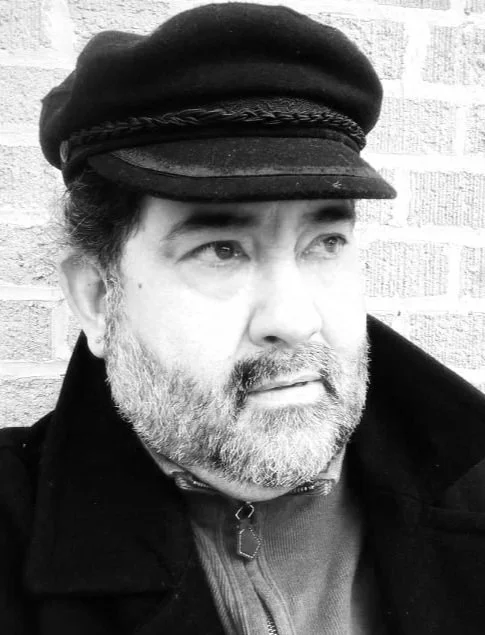
Robert René Galván, United States “Banyan”
Robert is a poet and professional musician whose life has been shaped by literature, music, history, philosophy, and a lifelong commitment to social justice. He has written poetry since the age of seven and has maintained hundreds of journals alongside a personal library of more than 40,000 volumes. His diverse Indigenous American, Moorish, Sephardic, North African, and South Indian heritage informs much of his work, which explores themes of identity, race, memory, nature, and the human experience. His collections include Meteors, Undesirable: Race and Remembrance, Standing Stones, and The Shadow of Time, and his poetry has appeared in numerous literary journals and anthologies.
What compels you to pick up a pen or open your laptop to free-write? And what inspires/influences your writing, particularly when it comes to addressing human rights issues?I use fountain pens to write poetry and have hundreds of bound journals dating back to when I was 7 years old. I possess a personal library of 40, 000 volumes, not counting my 103-year-old father's collection for which his current house was built. I constantly read philosophy, sciences, history and a myriad of subjects. I have been a performer and conductor of vocal/orchestral music for over 50 years now and have translated the poems of the greatest poets whose works were set to music in both classical and world music. For instance, my Peace of Heart Choir will perform a number of songs that deal with human rights, including Matisyahu's "One Day" at the IHRAF in this September.
How does your intersectionality influence your view of the world (your personal beliefs, gender expression, religious affiliations, etc.)?I was born of Indigenous Americas heritage, with the other half of my DNA pie comprised of Moorish, Sephardic, Northern Africa and Southern India. My surname is Spanish/Islamic. I have expressed this lineage through poetry, but also through the performance of World Music, chiefly my Peace of Heart Choir whose ethos is diversity, inclusion, social justice and environmental conscience. They will perform at IHRAF in September.
Stay tuned on Instagram
Discover new stories from up-and-coming writers.
Join our movement in supporting underrepresented voices.