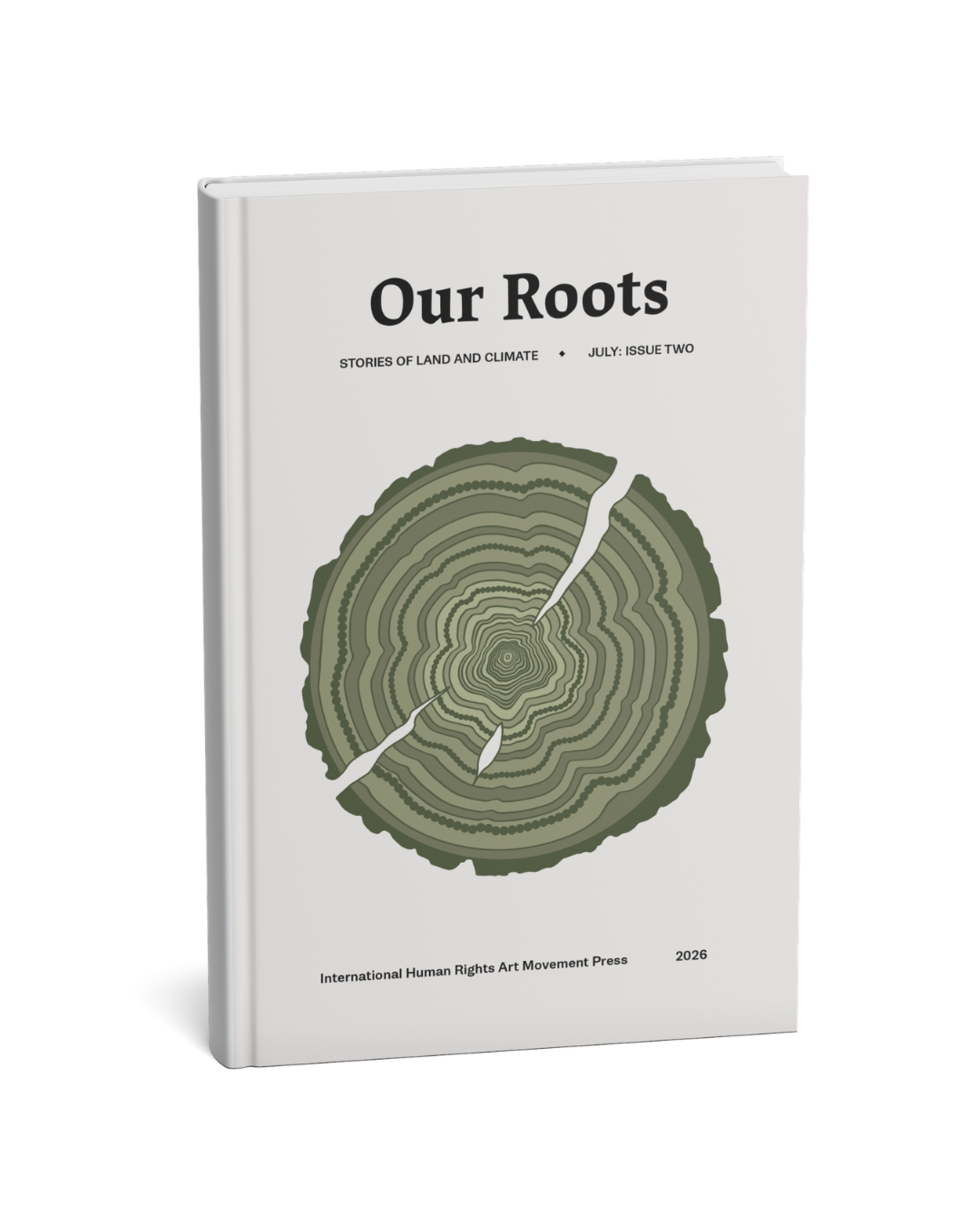

What makes them write? The writers of our recently released magazine, “Our Roots: Stories on Land and Climate,” have responded. Inside the Writing Process is an on-going series dedicated to revealing what inspires and influences our contributors’ writing and beliefs because IHRAM Press is dedicated to diversity, community, and representation.
Meet Anushree, Helena, and more of our inspired writers: for them, writing is about vulnerability, memory, and resistance; the danger of complacency.
Anushree Singh, India, “Forty-Five Degrees in April”
Anushree is a writer from India, which has influenced her through its rich diversity of languages, cultures, histories, and perspectives, which continue to inform her interest in intersectionality and the experiences that shape how we see the world. She believes literature can create meaningful encounters between different perspectives, encouraging readers to pause, question, empathise, and see differently. Her work is shaped by the complexities of everyday life, the humans behind difficult social issues, alongside literature, history, and society.
What compels you to pick up a pen or open your laptop to free-write? And what inspires/influences your writing, particularly when it comes to addressing human rights issues? I usually write when something refuses to leave my mind. It might be a conversation, an image, an uncomfortable question, or something I notice in everyday life that feels larger than it initially appears. Writing gives me a way to sit with those thoughts rather than immediately trying to resolve them. My writing is influenced by literature, history, society, and the small details of ordinary life. When I write about human rights, I am particularly interested in the human being behind an issue or statistic. I think stories can make us look at difficult subjects differently—not simply as problems to be solved, but as experiences lived by real people with dignity, contradictions, hopes, and fears.
How does your intersectionality influence your view of the world (your personal beliefs, gender expression, religious affiliations, etc.)?My perspective is shaped by the combination of my experiences, education, interests, relationships, and the cultural environment around me. That has made me increasingly interested in listening to perspectives different from my own. For me, intersectionality is ultimately about recognising that people cannot be understood through a single category; our experiences overlap, sometimes complementing one another and sometimes creating tensions. Writing gives me a way to explore those complexities rather than pretending they have simple answers.
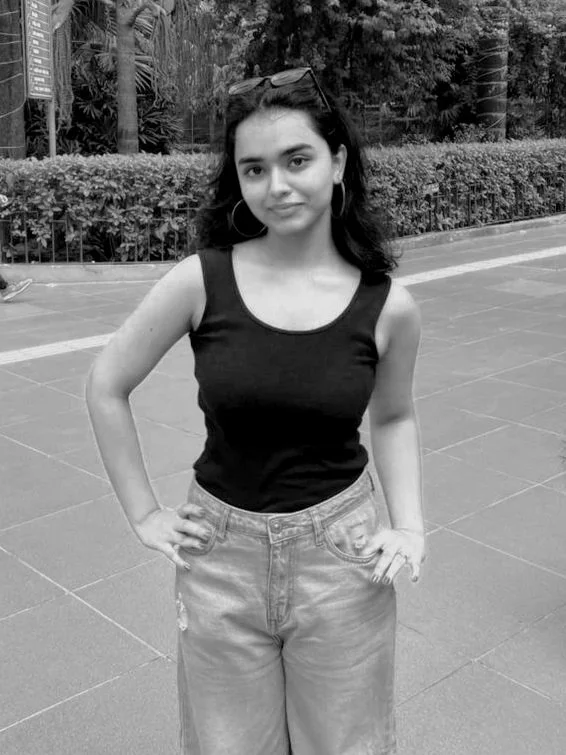
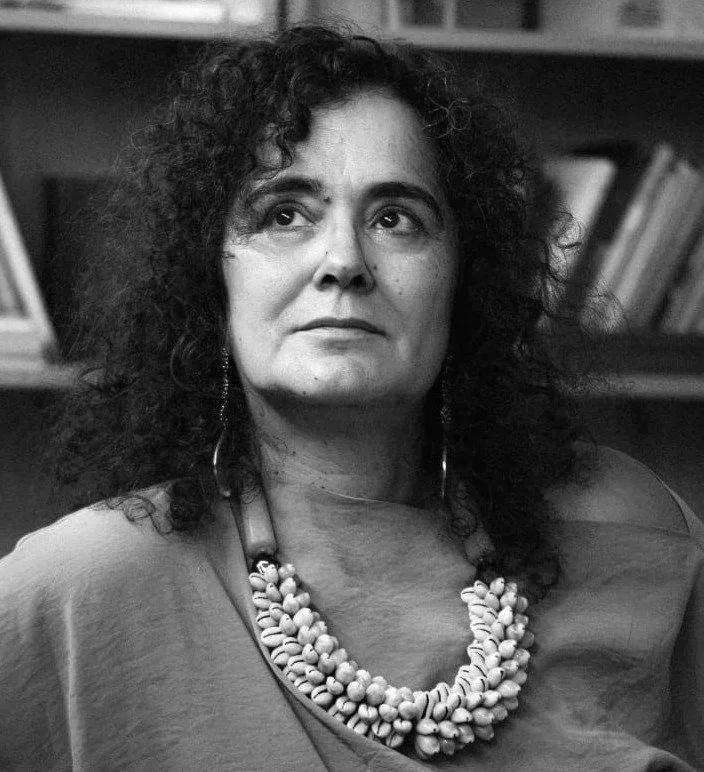
Helena Gonçalo Ferreira, Portugal, “Notes From a Body That Was Also Earth”
Helena is a Portuguese writer whose work explores injustice, identity, memory, gender, and silence, the things that go unsaid. Listening and learning from writers before her that dealt with themes of gender, power, social justice, and systemic oppression, she believes literature can bear witness without simplifying suffering, finding beauty in attention, vulnerability, and human dignity. Her work is shaped by Portugal's complex history of dictatorship, colonialism, migration, and revolution, as well as her own experience of growing up on the margins of Europe.
What compels you to pick up a pen or open your laptop to free-write? And what inspires/influences your writing, particularly when it comes to addressing human rights issues?Writing is rarely a planned decision. I write when something won't let go of me - a piece of news read in the morning that stays with me all day, a conversation, an injustice everyone seems to have agreed not to name. Activism gives us slogans, and they're necessary, because they have to fit on a placard. But there is always a remainder that doesn't fit: the doubt, the anger with no one to aim it at, the tenderness, the obligation to resist. It's that remainder that makes me open my laptop. What inspires and influences my writing is, above all, the women who wrote before me and who understood that indignation alone does not make literature. Svetlana Alexievich taught me that listening is a form of writing, and that the history of a whole country can fit inside the voice of one ordinary person.
How does your intersectionality influence your view of the world (your personal beliefs, gender expression, religious affiliations, etc.)?The question carries an implicit idea: that intersectionality is a separate chapter - the surrounding world on one side, identity on the other. I don't think it works like that. Intersectionality is not a layer added to the way we look at things: it is the way we look. There is no neutral place from which to see the world, no position without a body, without class, without language, without geography. Anyone who believes they are speaking from nowhere is simply speaking from the centre without having noticed. Being a woman, for instance, is not a subject I deal with when I write about women. It is there in the way I cross a street at night, in the way I am listened to in a meeting, in the particular tiredness of having to prove things that others are simply granted. That doesn't switch off when I write about anything else - about borders, about memory, about environmental questions, about a country. It comes along.
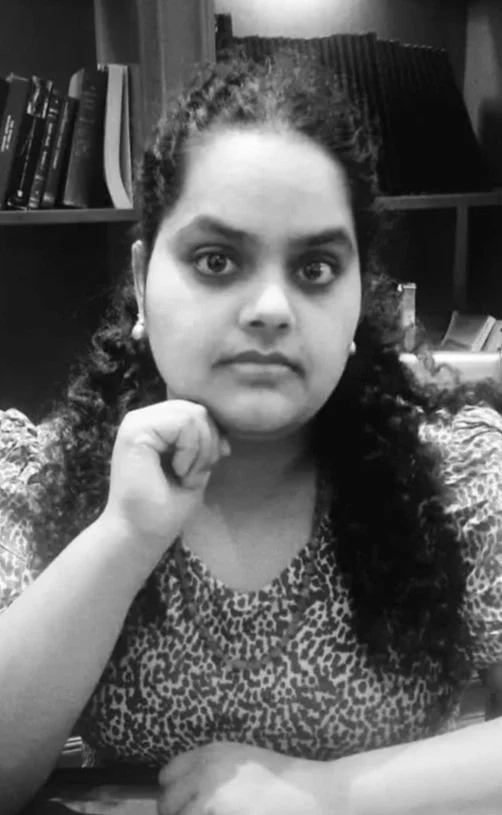
Pulkita Anand, India, "The Poetry of Earth is Never Dead”
Pulkita is a writer from India. For her literature is a means of giving voice to the unheard, challenging injustice, and imagining a more humane world. Influenced by Robert Browning and the translated works of Indigenous writers, her writing explores human rights, compassion, nature, interconnectedness, and the possibility of change even in the face of suffering. Raised in a culture that emphasises empathy towards others and living beings, she draws inspiration from both her semi-urban surroundings and the natural world around her. She believes that art can transcend time, connect people across differences, and leave readers with hope while encouraging them to work towards a more just and compassionate future.
What compels you to pick up a pen or open your laptop to free-write? And what inspires/influences your writing, particularly when it comes to addressing human rights issues?I guess the pen stared at me and made me realize if not today then never. I scribbled and scribbled till the words took shape and the muse made me sing the songs of those unheard and unsung tales, to voice that's hard yet true. I don't know what change words make but I wish to change the wrongs to rights. IHRAM's work too have shaped my writing. I am indebted to all those wonderful work that were published by IHRAM. Writing is a way to resist and renew the order. If words have power then certainly change is possible. If conscience is pricked then consciousness will change.
How does your intersectionality influence your view of the world (your personal beliefs, gender expression, religious affiliations, etc.)?In my religion, we believe in Vasudhaiva Kutumbakam (the world is one family). I believe that we are interconnected despite our differences. The whole process of life is like a boomerang: what we give to the world we get back, if not now, then later. The pandemic has proved this to us. Though we have shut our eyes to global issues, it does affect us despite our distance from them. We should work for the betterment of humanity and the good of this planet. No man is an island. Human rights are for everyone. The breach of rights will affect us one way or the other. Let’s respect everyone’s rights.

Vaishnavi Pusapati, India, “The Well That Burned”
Vaishnavi is a writer from India whose work explores displacement, belonging, memory, and the human cost hidden within ideas of progress and development. Her writing seeks to transform distant headlines and historical events into intimate human stories, finding hope in the quiet acts of dignity, resilience, and remembrance that allow people to endure and rebuild. She believes literature can bear witness, challenge silence, and open doorways into lives beyond our own.
What compels you to pick up a pen or open your laptop to free-write? And what inspires/influences your writing, particularly when it comes to addressing human rights issues?A headline can tell us that a community was displaced. Fiction can ask what the last evening before leaving home felt like. That difference is what draws me to writing. The Well That Burned began with the impossible image of a bucket smelling of fire, but it stayed with me because it asked a more difficult question: what happens when the thing a community has prayed for becomes the reason it disappears? I am interested in the human cost hidden inside words like development, progress, and national interest. Writing allows me to slow those words down until they become individual lives again.
How does your intersectionality influence your view of the world (your personal beliefs, gender expression, religious affiliations, etc.)?The view from my window is my only familiar view. It is the place from which my voice begins. I know there are unconscious biases that draw me towards what feels familiar, yet there is an equally strong curiosity towards the unknown. Reading and writing let me lean beyond that window and catch glimpses into the busy lives of others. They remind me that every person sees the world through a different frame, shaped by experiences I may never fully share but can strive to understand. My perspective is therefore shaped as much by curiosity as by familiarity. I try to write from where I stand while remaining open to voices beyond my own, recognizing that every story offers another window onto the world.
Stay tuned on Instagram
Discover new stories from up-and-coming writers.
Join our movement in supporting underrepresented voices.