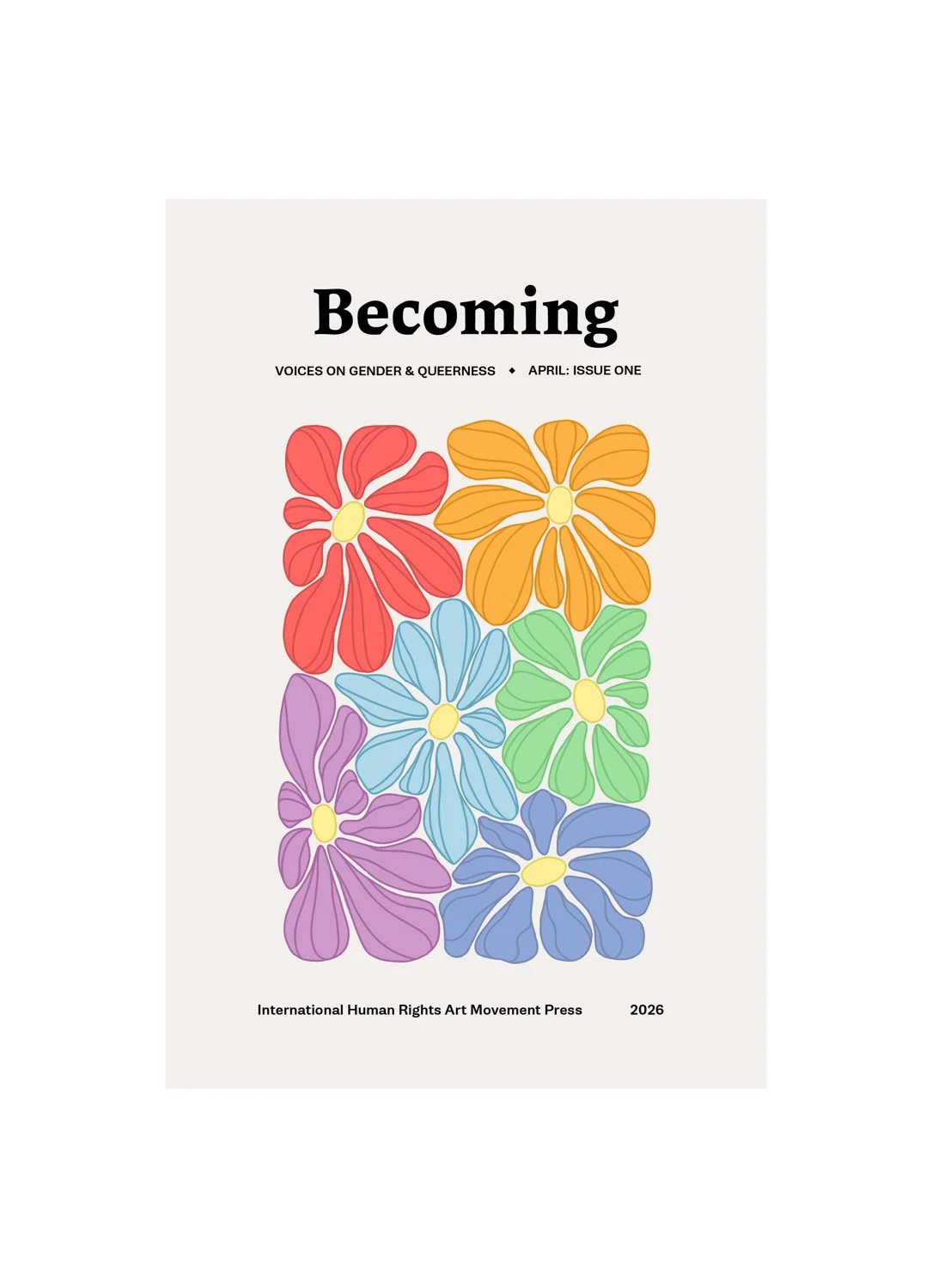

“Becoming: Voices on Gender & Queerness”—Meet the Authors (Part 1)
What makes them write? The writers of our latest literary magazine, “Becoming: Voices on Gender & Queerness,” have responded. Inside the Collective is an on-going series dedicated to revealing what inspires and influences their writing and beliefs because the IHRAM Press is dedicated to diversity, community, and representation.
Meet Gloria, Jozsef, and the other writers: for them, writing is about vulnerability, equity, and resistance; stories that refuse to stay silent.
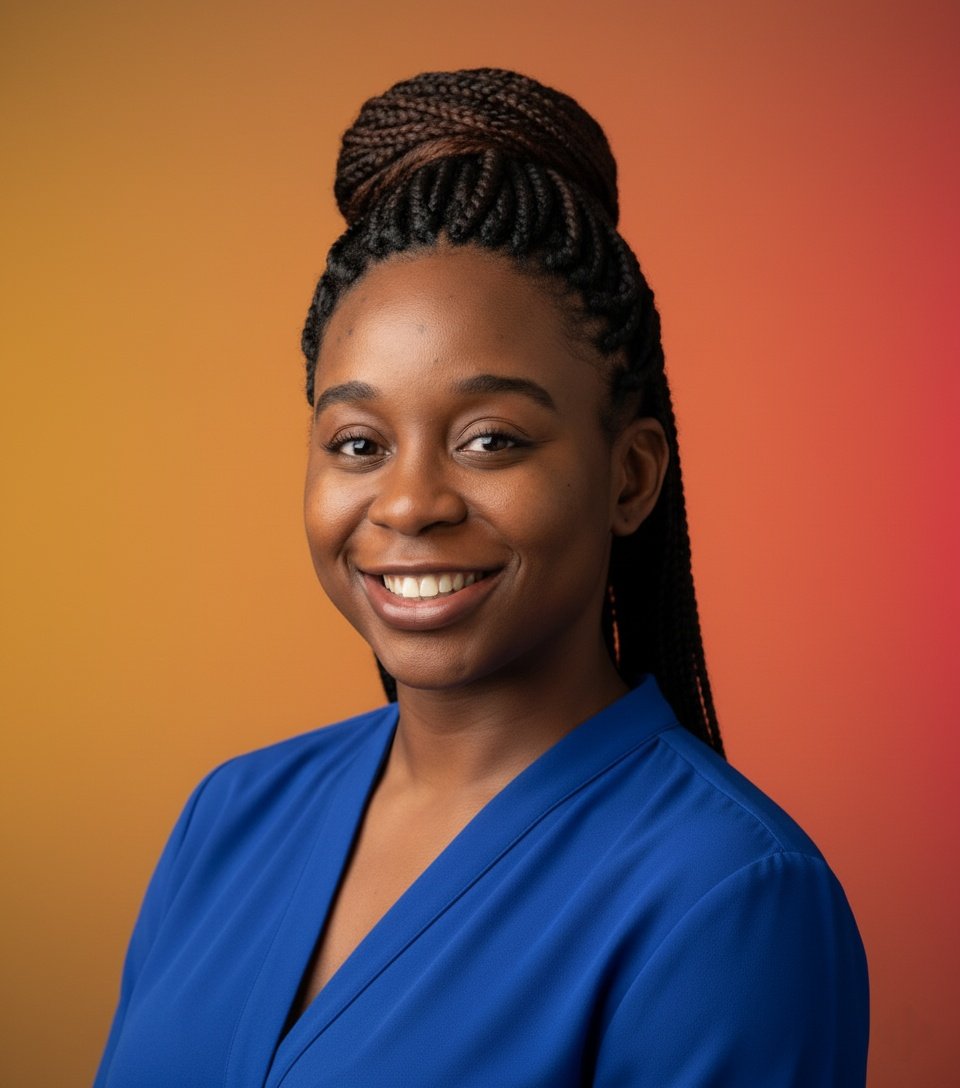
Gloria Ogo, USA, “We Practice Our Names Like Water”
Gloria Ogo is an American-based Nigerian writer with several published novels and poetry collections. Her work has appeared in Eye to the Telescope, Brittle Paper, Spillwords Press, Metastellar, Gypsophila Magazine, Harpy Hybrid Review, and more. She holds a Master of Fine Arts in Creative Writing and serves as a reader for Reckoning Magazine. She is the winner of the Brigitte Poirson Literature Prize (2024) and the finalist of various prizes, including the ODU Poetry Prize (2025). Her work was longlisted for the 2025 American Short(er) Fiction Prize.
What compels you to pick up a pen or open your laptop to free-write? And what inspires/influences your writing, particularly when it comes to addressing human rights issues? What compels me to write often begins with a sense of urgency, an inner restlessness when I encounter injustice, silence, or stories that feel overlooked. Free-writing is my way of making sense of the world and my place within it; it allows me to explore difficult questions before they fully take shape as structured arguments or narratives. When I write about human rights, I am motivated by the understanding that these issues are not abstract legal principles but lived realities shaped by memory, struggle, and resilience.
How does your intersectionality influence your view of the world (your personal beliefs, gender expression, religious affiliations, etc.)?My intersectionality profoundly shapes how l see and engage with the world, because it situates me at the crossroads of multiple identities and lived experiences. My personal beliefs, gender expression, cultural background, and any spiritual or religious affiliations I hold all inform the lens through which I interpret human behavior, justice, and creativity. Experiencing life from these overlapping positions fosters both empathy and critical awareness: I am attuned to how systems of privilege and oppression operate differently across communities, and I am conscious of the ways my own perspective can both illuminate and blind me. This awareness encourages me to question assumptions, listen deeply to voices different from my own, and approach writing with intentionality and care.
Make it stand out
Whatever it is, the way you tell your story online can make all the difference.
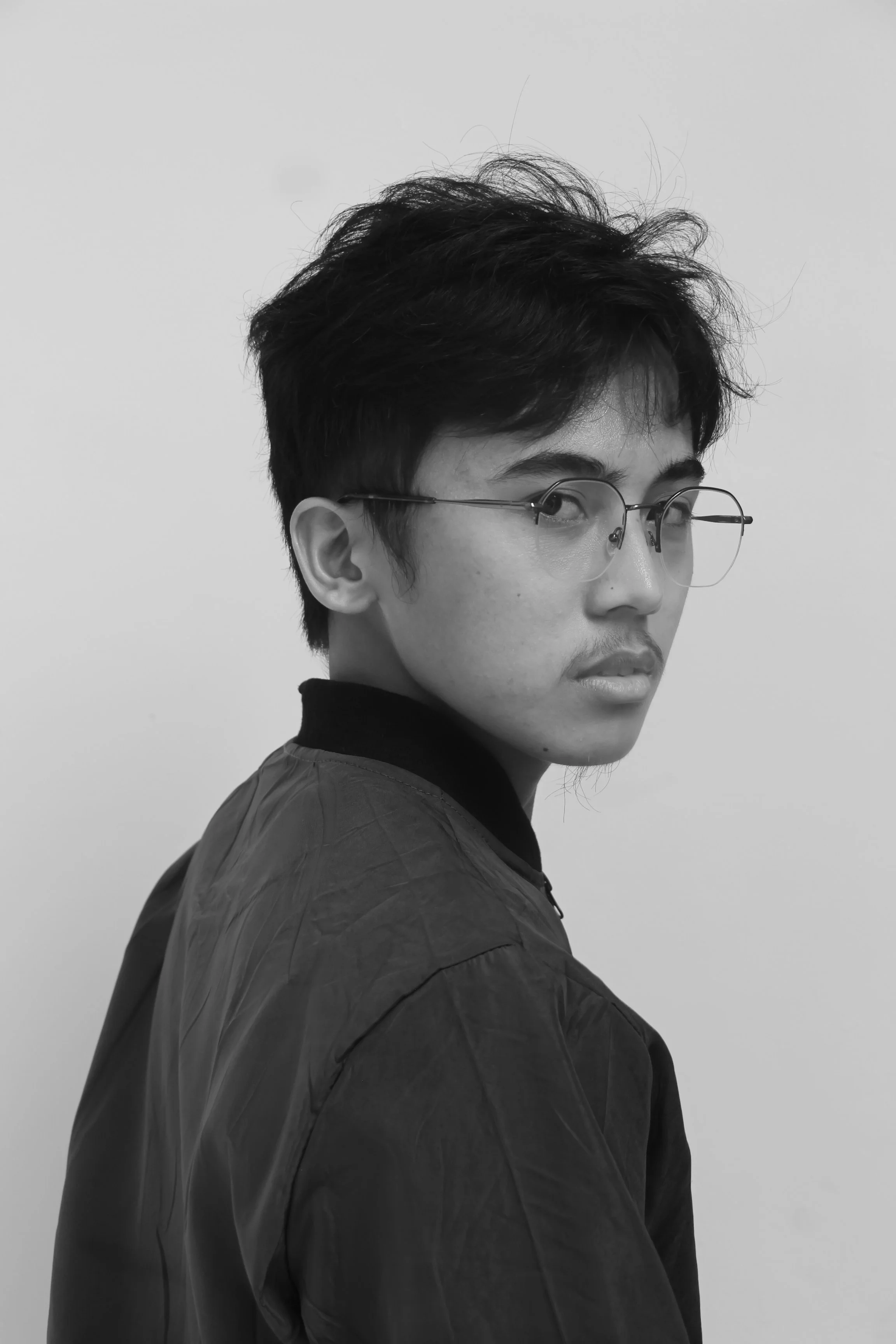
Jozsef Cariste, Philippines, “I Am a Palette of Experiences”
Jozsef Cariste is a writer from Cebu, Philippines. He began his writing journey during the 2020 pandemic, exploring poetry, fiction, and creative nonfiction. Cariste’s writing is deeply rooted in his lived experiences, reflecting the rhythms of countryside life and giving voice to the struggles of the working class that raised him. His pieces often resonate with themes of love, longing, and the profound intricacies of human connection. His work, “Between Onlys and Somewheres,” appeared in IHRAM Press’ 2025 Third Quarterly Magazine and was nominated for Best American Essays.
What compels you to pick up a pen or open your laptop to free-write? And what inspires/influences your writing, particularly when it comes to addressing human rights issues?I write because stories have the power to affirm existence. Seeing writers whose experiences mirror mine gave me courage, and I hope that through my work, a queer reader might feel seen, empowered, and reminded that living their truth is valid. Writing becomes my way of contributing to a world where human rights—and the dignity of every person—are recognized and respected.
How does your intersectionality influence your view of the world (your personal beliefs, gender expression, religious affiliations, etc.)?My intersectionality—my personal beliefs and gender expression—has shaped how I view the world. Growing up, I saw how experiences and expectations were passed down, which sparked the curious child in me to seek the truth and stand firmly for who I am. It has taught me to recognize privilege and oppression, question inherited beliefs, and empathize with experiences different from my own. My gender expression and personal beliefs, intersecting with my cultural and familial background, have shown me that identity is both personal and shaped by society.
Make it stand out
Whatever it is, the way you tell your story online can make all the difference.
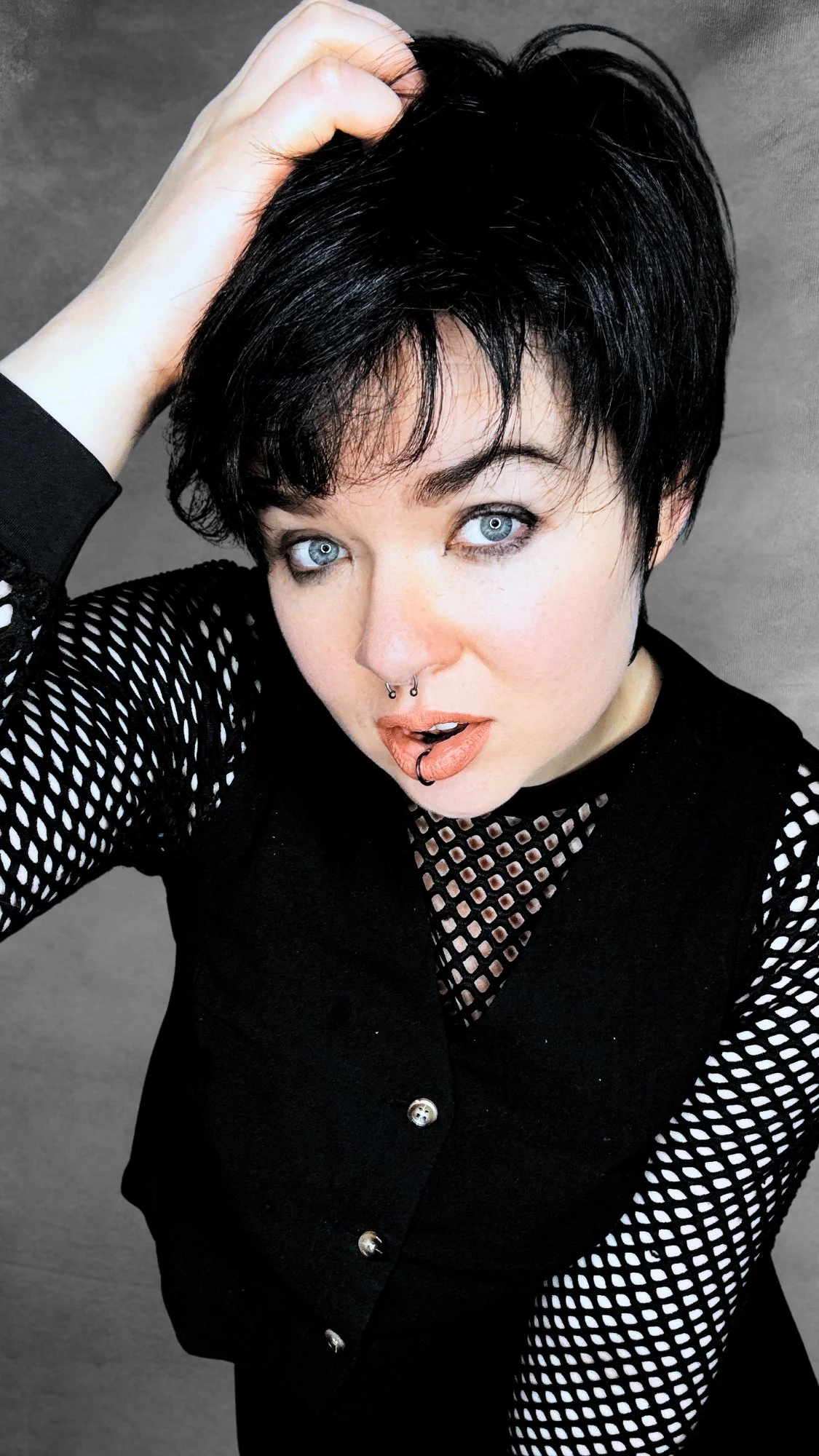
Charlotte Poitras, Canada, “Check”
Charlotte Poitras is a queer neurodivergent artist-entrepreneur based in Montréal. Her practice is autobiographical or documentary, spanning literature, theater, visual arts, and audiovisual work, with over one hundred publications. Her mission is to listen to the world and transmit the murmurs that society has failed to hear.
What compels you to pick up a pen or open your laptop to free-write? And what inspires/influences your writing, particularly when it comes to addressing human rights issues?I do not write to be loved or to please people, but because I have something important to say. Writing for me is not only a passion, it is a need to change the world in my own way by using my voice. I believe education is the strongest weapon and I want to fight for a better society by teaching people about social issues
Make it stand out
Whatever it is, the way you tell your story online can make all the difference.
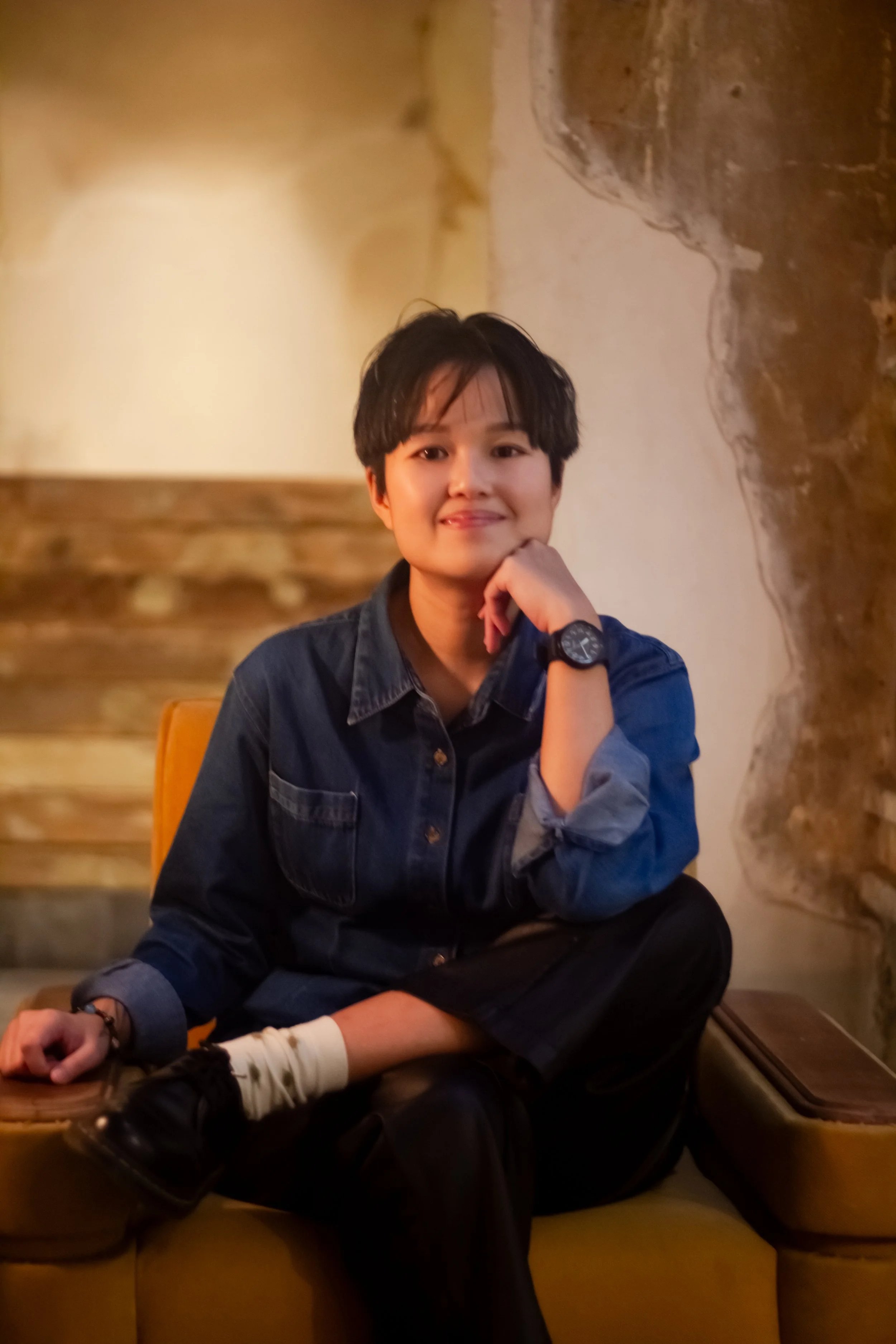
Eve Xin, UK & Singapore, “Queerness is a Migration”
Eve Xin is a queer, migrant poet living in exile, writing poetry and fiction on home, identity, queerness, and decolonization. Eve Xin’s work is featured in various queer and global majority spaces internationally: The Seventh Wave, ANMLY, River’s Edge, t’ART, Thawra, and more. Their writing has been supported by residencies and workshops with The Seventh Wave, Writing Our Legacy, and Kweli Journal.
What compels you to pick up a pen or open your laptop to free-write? And what inspires/influences your writing, particularly when it comes to addressing human rights issues?I started actively writing and sharing my poetry after becoming a migrant, and in the last few years poetry has been a way for me to document my felt experiences and observations of our burning world. My work is often rooted in grief, and above all love, for one cannot exist without the other.
How does your intersectionality influence your view of the world (your personal beliefs, gender expression, religious affiliations, etc.)?Living at the intersections as a queer, nonbinary migrant from the global majority, I often feel like I can only be seen and understood in parts, depending on who I am speaking to. But living on the margins also means you can see a lot more of the whole picture, and how all our struggles are actually interconnected.
Make it stand out
Whatever it is, the way you tell your story online can make all the difference.
Stay tuned on Instagram
Discover new stories from up-and-coming writers.
Join our movement in supporting underrepresented voices.