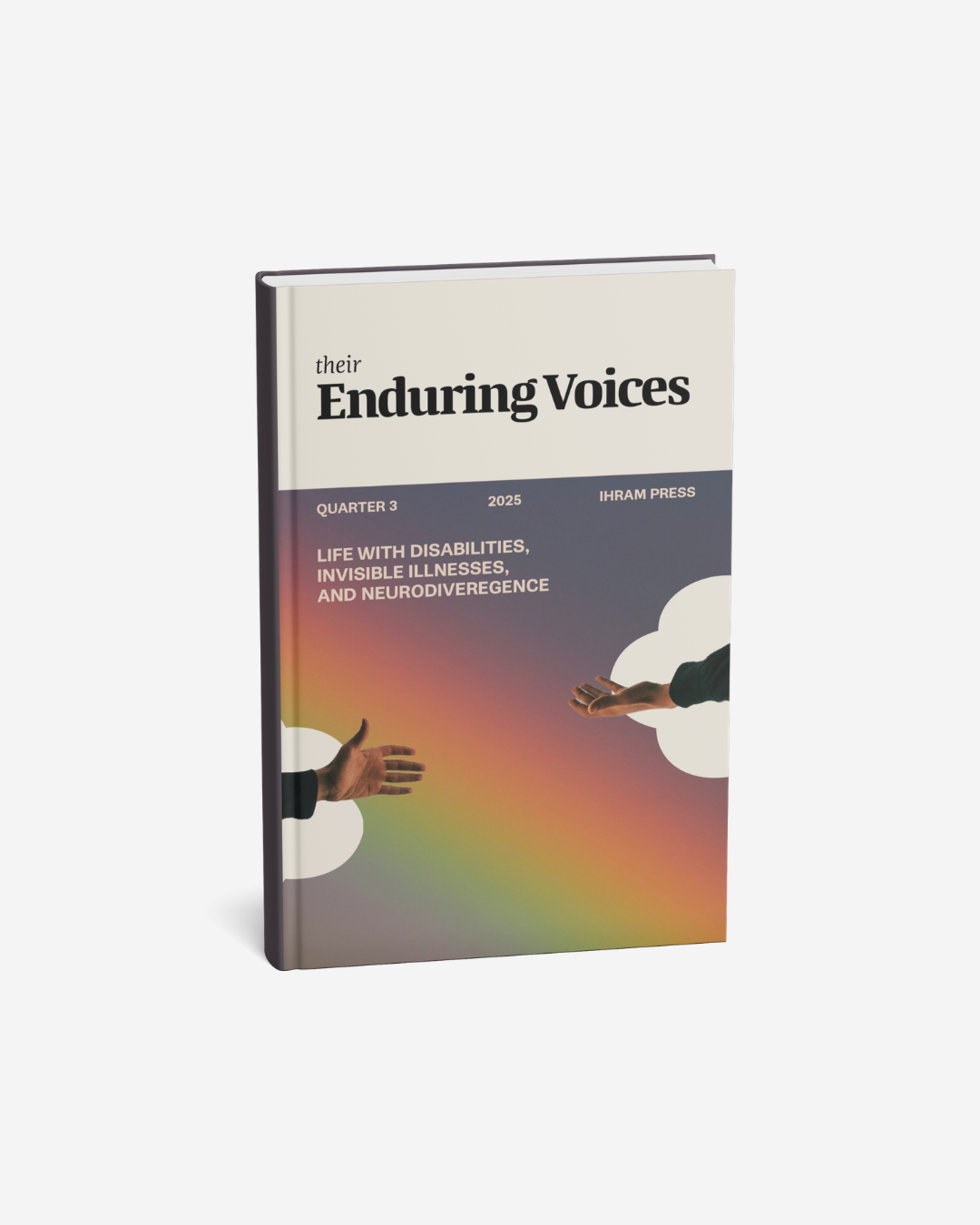
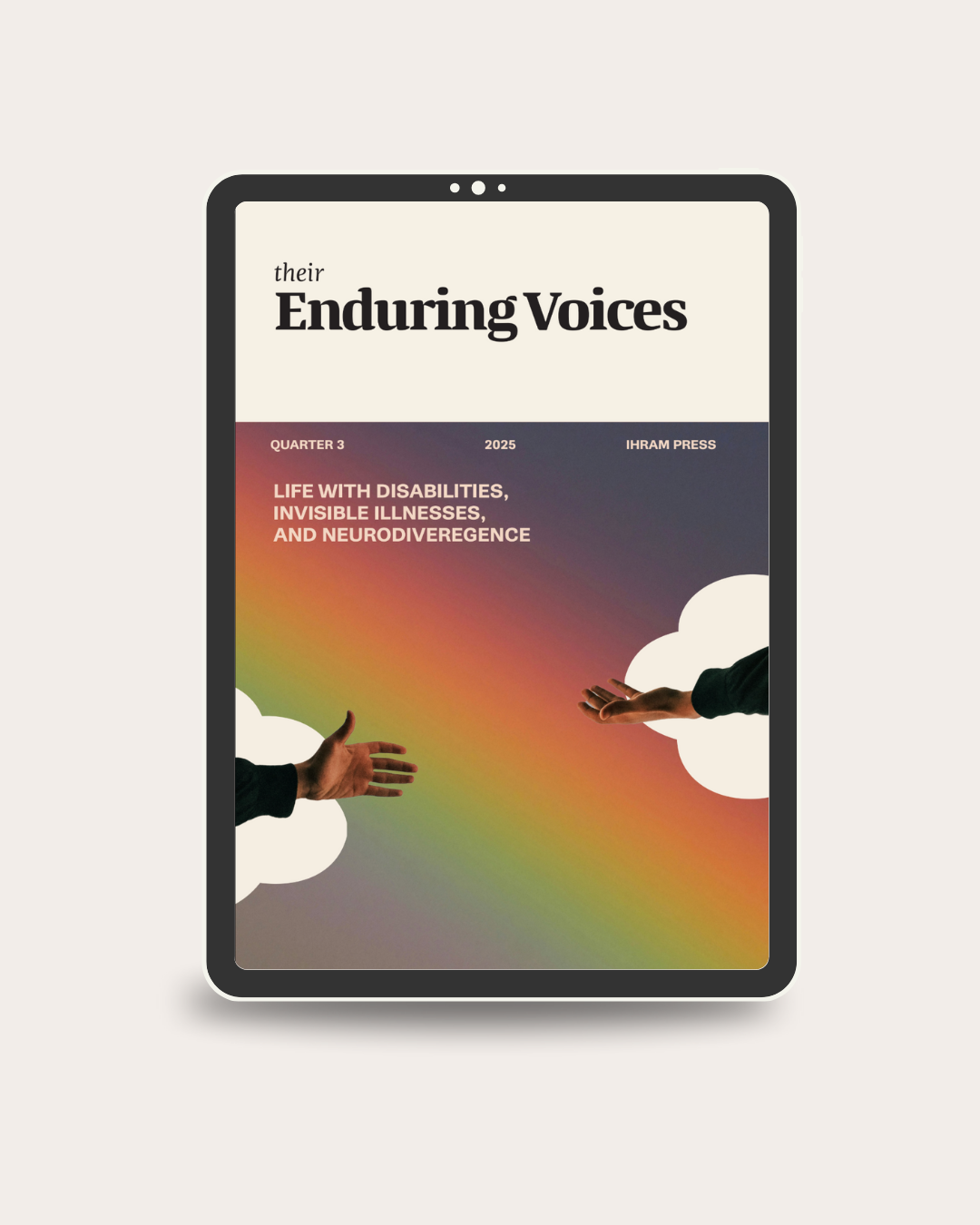
Enduring Voices (2025 / Q3 / E-Magazine)

$2.00

Quarter 3 Literary Magazine (digital version)

Enduring Voices is the Third Quarterly Edition 2025 of the International Human Rights Art Movement (IHRAM) Literary Magazine, curated and edited by Lisa Zammit. Centered on the theme Life with Disabilities, Invisible Illnesses, and Neurodivergence, this powerful collection features global authors and artists sharing first-hand experiences of chronic illness, disability, mental-health conditions, and neurodivergent identity. Through poetry, essays, and creative nonfiction, contributors illuminate realities such as endometriosis, autism, bipolar disorder, sickle cell disease, diabetes, and more—offering honesty, resilience, and hope. Published by the International Human Rights Art Festival (IHRAF), the edition amplifies marginalized voices and fosters deeper understanding of diverse lived experiences.

Quarter 3 Literary Magazine (digital version)

Enduring Voices is the Third Quarterly Edition 2025 of the International Human Rights Art Movement (IHRAM) Literary Magazine, curated and edited by Lisa Zammit. Centered on the theme Life with Disabilities, Invisible Illnesses, and Neurodivergence, this powerful collection features global authors and artists sharing first-hand experiences of chronic illness, disability, mental-health conditions, and neurodivergent identity. Through poetry, essays, and creative nonfiction, contributors illuminate realities such as endometriosis, autism, bipolar disorder, sickle cell disease, diabetes, and more—offering honesty, resilience, and hope. Published by the International Human Rights Art Festival (IHRAF), the edition amplifies marginalized voices and fosters deeper understanding of diverse lived experiences.


Format: E-magazine

Publication date: September 2025

Part of the IHRAM Literary Magazine series


What are people saying?

  • From the first page, I knew this literary magazine was unlike any other I’ve read before. The personality of each author and creative lifted off the page, I felt as though they were on my couch speaking to me directly. We laughed together, cried, held hands and space for the experiences many individuals with invisible illnesses feel inhibited from sharing with neurotypicals for fear of being misunderstood and shamed— which they often are in this society.

  • There are some incredibly vulnerable and powerful moments displayed here. Whether losing and finding yourself through illness, raising neurodiverse children, growing up as the child of a differently abled adult yourself, or otherwise living in the liminal space of not-quite-perfect health; there are a multitude of ways of existing presented here in raw and open ways. Each piece is accompanied by a summary or reflection from the contributor, allowing for additional context to truly appreciate the work. As diverse as every individual story appears to be, what clearly runs through the entire collection of works is a strong desire to be heard, seen, and accepted without the need to change within non-binary, societal, and cultural norms. There is a profound solidarity of shared, but simultaneously incredibly unique experiences which remind us about the core fundamental need to be able to exist without being forced to painfully alter the self. I can't really express what it felt to read this, at this particular time.


Magazine Details

  • Curated & Edited by: Lisa Zammit

  • Cover Design by: Lisa Zammit

  • Founding Producer Contact: Tom Block (for permission requests)

  • Editor's Word: The editor notes that the magazine provides a platform for authors and artists to share first-hand accounts of living with disabilities, invisible illnesses, and neurodivergence, offering hope and inspiration.

  • Disclaimer: Reader's discretion is advised, as some pieces contain mentions of mental-health conditions, medical conditions, cancer, and sexual assault/sexual abuse.

Selected Contents

The magazine features works from global authors and artists, including:

  • "Symptoms May Vary" by Felicia Sabartinelli (discusses living with stage 4 endometriosis, PCOS, asthma, and chronic allergies)

  • "Alone" by Maria Grech Ganado (reflects on isolation from bipolar disorder, anxiety, and fibromyalgia)

  • "The Manic Pixie Dream Girl, To Herself In The Mirror" by Alex K. Masse (about the autistic lived experience and compensating for disability)

  • "This Body is Not an Apology" by Argelia Salmon (an essay exploring societal perception of bodies that do not conform to ability expectations)

  • "The Weight of Inheritance" by Irene W. Collins (shares the experience of living with sickle cell disease in Ghana and Nigeria)

  • "The Sugar Beneath My Skin" by Nma Dhahir (a poem on the daily reality of living with diabetes)