
Our Roots—Why Create Art for Social Change? (Part 2)
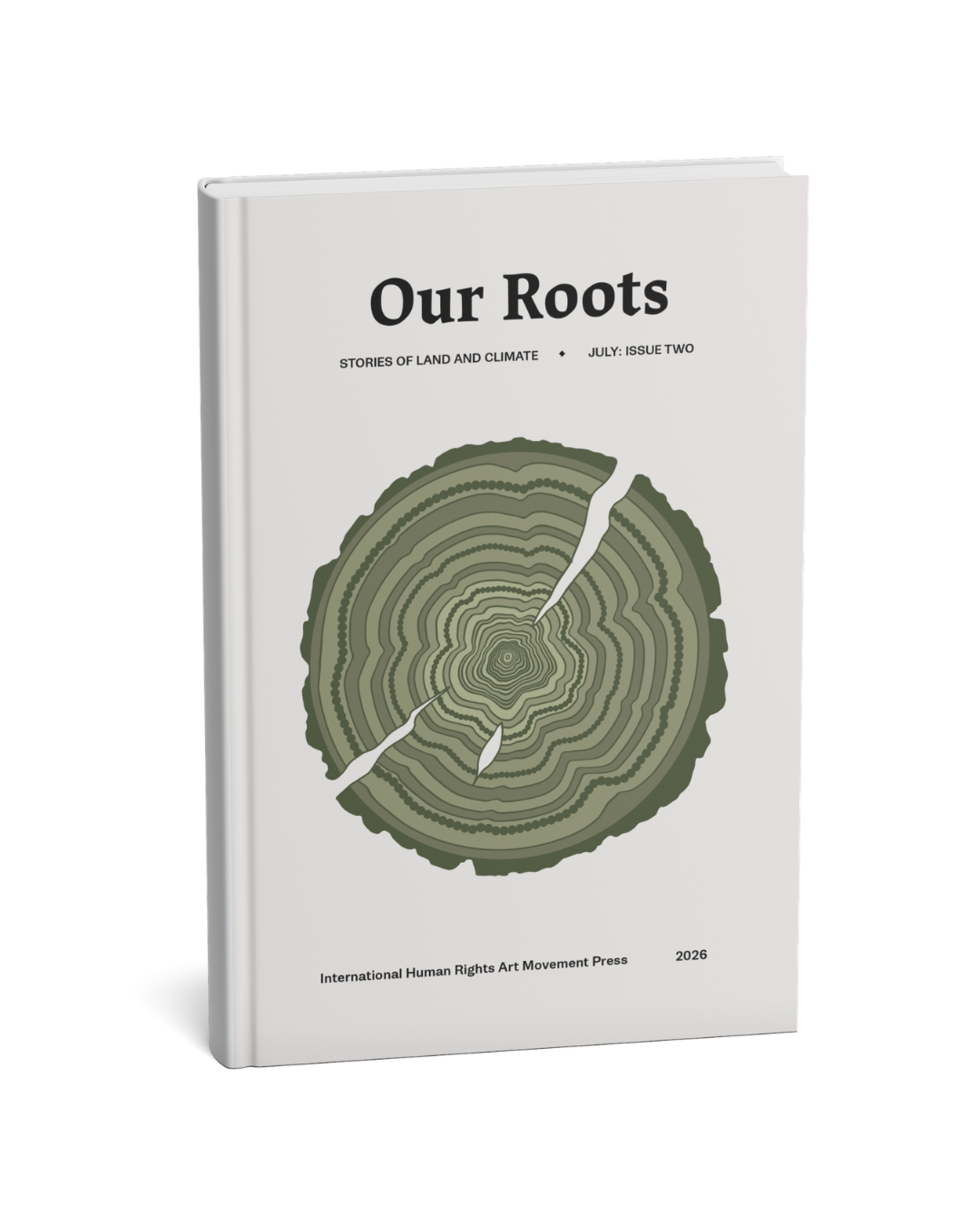
What makes them write? The writers of our recently released magazine, “Our Roots: Stories on Land and Climate,” have responded. Inside the Writing Process is an on-going series dedicated to revealing what inspires and influences our contributors’ writing and beliefs because IHRAM Press is dedicated to diversity, community, and representation.
Meet Anushree, Helena, and more of our inspired writers: for them, writing is about vulnerability, memory, and resistance; the danger of complacency.
Anushree Singh, India, “Forty-Five Degrees in April”
Anushree is a writer from India, which has influenced her through its rich diversity of languages, cultures, histories, and perspectives, which continue to inform her interest in intersectionality and the experiences that shape how we see the world. She believes literature can create meaningful encounters between different perspectives, encouraging readers to pause, question, empathise, and see differently. Her work is shaped by the complexities of everyday life, the humans behind difficult social issues, alongside literature, history, and society.
The human rights concerns addressed in "Our Roots: Stories of Land and Climate." How do you navigate the balance between highlighting these challenges and maintaining a sense of hope or optimism in your writing? I don't think writing about difficult realities requires us to make them easier than they are. I would rather acknowledge discomfort honestly than force an optimistic ending onto something that doesn't have one. For me, hope comes from the act of paying attention itself. The fact that we continue to question, empathise, create, and speak about difficult subjects is hopeful. I try to leave the reader with a sense that change is possible—not because the problem is simple, but because people are capable of seeing differently and choosing differently.
How do you personally connect with our mission? Particularly on the power of art and literature to influence social change, and our values of beauty as a fundamental creative principle, sincerity, vulnerability, celebrating diversity, and opening doorways of engagement.I connect strongly with the idea that art does not have to be separate from social change. Literature can create a kind of encounter: it allows us to enter perspectives that we may never experience ourselves. I also believe that beauty and sincerity can coexist with difficult subjects. Something does not have to be comfortable to be beautiful, and vulnerability does not make writing weaker—it can make it more truthful. I value IHRAM's emphasis on creating doorways of engagement because meaningful change often begins with something as simple as making another person pause, feel, question, or start a conversation.
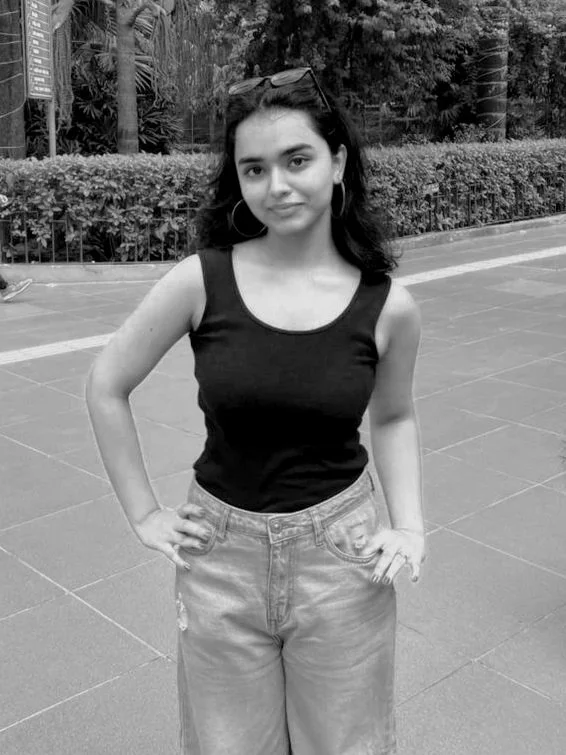
Click Anushree’s photo to learn more about her
Helena Gonçalo Ferreira, Portugal, “Notes From a Body That Was Also Earth”
Helena is a Portuguese writer whose work explores injustice, identity, memory, gender, and silence, the things that go unsaid. Listening and learning from writers before her that dealt with themes of gender, power, social justice, and systemic oppression, she believes literature can bear witness without simplifying suffering, finding beauty in attention, vulnerability, and human dignity. Her work is shaped by Portugal's complex history of dictatorship, colonialism, migration, and revolution, as well as her own experience of growing up on the margins of Europe.
The human rights concerns addressed in "Our Roots: Stories of Land and Climate." How do you navigate the balance between highlighting these challenges and maintaining a sense of hope or optimism in your writing? I'll admit I'm a little wary of the word optimism. Optimism assumes things will turn out well, and writing about human rights means accepting that very often they don't. If the hope I offer my readers depends on a consoling ending, then I'm lying - and lying, on these subjects, is a form of disrespect towards those who lived through what I'm writing about. […] Hope, here, is not optimism: it is the memory that things have changed before. So I don't try to balance anything, in the sense of measuring out doses. I try not to take from people either the weight of what happened to them or the possibility of remaining whole.
How do you personally connect with our mission? Particularly on the power of art and literature to influence social change, and our values of beauty as a fundamental creative principle, sincerity, vulnerability, celebrating diversity, and opening doorways of engagement.Sincerity and vulnerability seem to me inseparable from this. Anyone who writes about injustice from a position of absolute certainty produces texts nobody needs to read: you know in advance what they will say. What interests me is the opposite — writing from the place where I still don't know, where I'm afraid, where I may be mistaken, where nothing is settled. It is that admitted helplessness that leaves the door ajar. No one walks into a house locked from the inside. As for diversity, I see it less as a question of representation than of listening. There are voices that only come into existence when someone gives them a page. A magazine that publishes people writing out of other languages, other contexts and other pains is making a political statement before a single text has even been read.
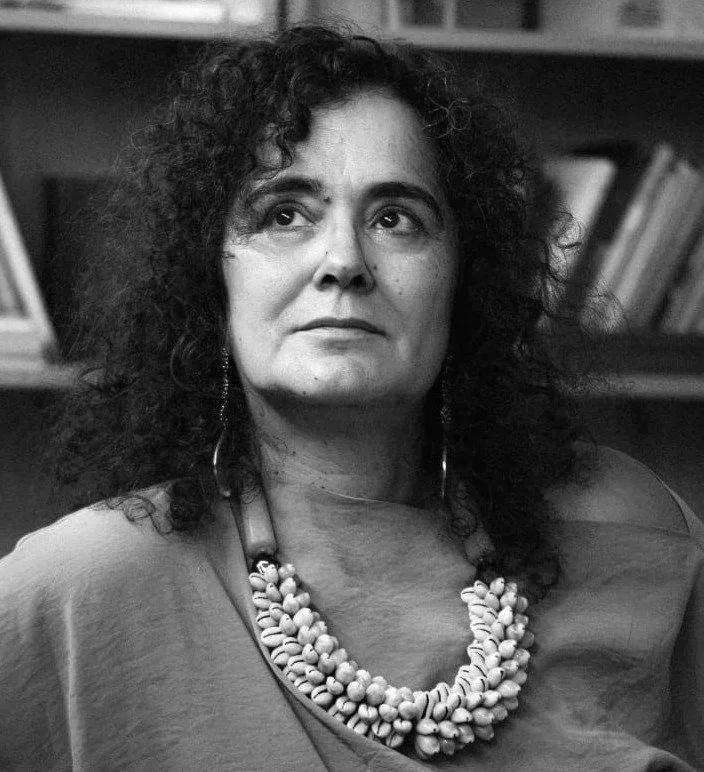
Click Helena’s photo to learn more about her
Pulkita Anand, India, "The Poetry of Earth is Never Dead”
Pulkita is a writer from India. For her literature is a means of giving voice to the unheard, challenging injustice, and imagining a more humane world. Influenced by Robert Browning and the translated works of Indigenous writers, her writing explores human rights, compassion, nature, interconnectedness, and the possibility of change even in the face of suffering. Raised in a culture that emphasises empathy towards others and living beings, she draws inspiration from both her semi-urban surroundings and the natural world around her. She believes that art can transcend time, connect people across differences, and leave readers with hope while encouraging them to work towards a more just and compassionate future.
The human rights concerns addressed in "Our Roots: Stories of Land and Climate." How do you navigate the balance between highlighting these challenges and maintaining a sense of hope or optimism in your writing? At times, it is very challenging to keep the balance as your heart bleeds and body weeps. I admire Robert Browning and his work. His lines particularly:
The best is yet to be.
I am always a fight so one fight more the best and the last.
His work has filled my mind with optimism and I feel that art leaves the reader with hope despite darkness around them.
How do you personally connect with our mission? Particularly on the power of art and literature to influence social change, and our values of beauty as a fundamental creative principle, sincerity, vulnerability, celebrating diversity, and opening doorways of engagement.Art connects us to the spiritual realm by making us feel and respond to things. It connects us in a profound sense and helps to transform and reform our surroundings. The legacy of art surpasses and transcends time and technology. It makes us realise the core of our being: humanity and connection. Art has been a tool for change in our world. It makes the place habitable and encourages us to work for betterment. I hope my work will be a step in this direction.

Click Pulkita ’s photo to learn more about her
Vaishnavi Pusapati, India, “The Well That Burned”
Vaishnavi is a writer from India whose work explores displacement, belonging, memory, and the human cost hidden within ideas of progress and development. Her writing seeks to transform distant headlines and historical events into intimate human stories, finding hope in the quiet acts of dignity, resilience, and remembrance that allow people to endure and rebuild. She believes literature can bear witness, challenge silence, and open doorways into lives beyond our own.
The human rights concerns addressed in "Our Roots: Stories of Land and Climate." How do you navigate the balance between highlighting these challenges and maintaining a sense of hope or optimism in your writing? History is, in many ways, a record of the human spirit, its resilience, and its remarkable ability to move forward despite uncertainty. That is where I find hope. Not in the belief that justice always prevails, but in the fact that people continue to endure, rebuild, and imagine a better future. […] I do not believe optimism comes from looking away from difficult realities. It comes from confronting them honestly while recognizing that resilience is an everyday act. The fight for dignity, justice, and belonging is rarely won all at once. Optimism inevitably wins, not because the struggle ends, but because people choose it again every day.
How do you personally connect with our mission? Particularly on the power of art and literature to influence social change, and our values of beauty as a fundamental creative principle, sincerity, vulnerability, celebrating diversity, and opening doorways of engagement.Art and revolution have always been braided together. Some of the most enduring works of literature were born out of resistance, not because they offered easy answers, but because they refused silence. That gives art a deeper purpose and a universality that transcends place and time. […] I connect deeply with IHRAM's belief that literature can open doorways of engagement. Stories ask us to inhabit lives beyond our own, making empathy possible in ways that arguments often cannot. They encourage us to question systems, challenge propaganda, and resist the temptation to see the world in simple binaries.
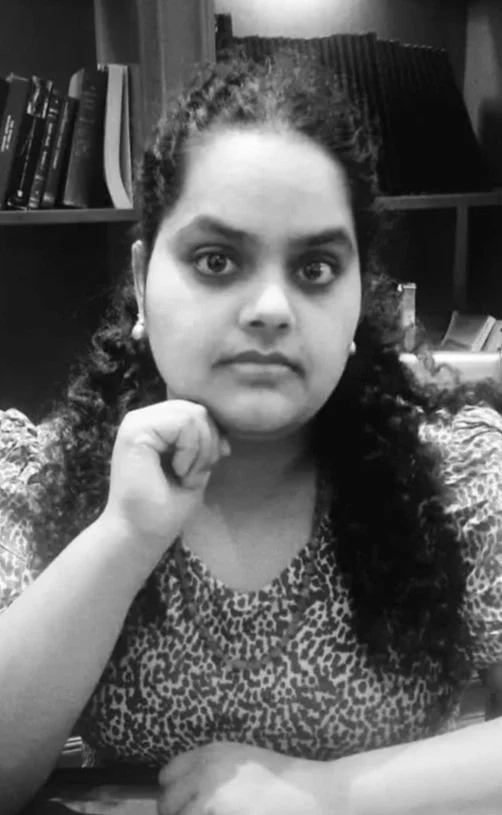
Click Vaishnavi’s photo to learn more about her
Stay tuned on Instagram
Discover new stories from up-and-coming writers.
Join our movement in supporting underrepresented voices.